Eleven days, twenty-two places

The whole journey, in order

Each day below is a chapter: where the ship is, what you go and see, and the story that makes it worth going to see. Read it straight through and the dragon shows up again and again — which is the point.

01

Day

出発

Monday, 19 July 2027In transit

Montréal → the Pacific

You lose a day on purpose

AC5 lifts off at 13:05 and flies thirteen hours and twenty minutes into tomorrow. Somewhere over the Bering Sea the date line takes the rest of Monday from you and sets you down on Tuesday afternoon. You get it back on the way home.

Warning for this day: One thing on this day is still unresolved and it sits above everything else on this site: an aggregator lists AC5 as operating Tuesday to Sunday, and 19 July 2027 is a Monday. Confirm the day of operation with Air Canada before a single other booking on this page is made. Everything downstream — the hotel, the ship, the coach seat — hangs off that flight existing.

Every move you make today3 legs · 15 h 50 min moving
  1. 08:30

    Private car1 h20 kmarrive 09:30

    Montréal to Montréal–Trudeau (YUL), departures kerb

    Private car. Autoroute 720 west to Autoroute 20, up onto the departures viaduct.

    Check this: Costed at the full hour rather than the free-flow 45 minutes. YUL's road network is mid-reconstruction until 2035 and the arrivals-level drop-off has been closed in rolling phases, pushing all traffic up to departures.

  2. 09:30

    On foot1 h 30 min800 marrive 11:00

    Departures kerb to AC5 gate, YUL international pier

    Air Canada priority check-in and bag drop inside the terminal, CATSA security on a timed YUL Express slot, then travelators out to the pier.

    Bags are tagged straight through to Narita — this is a single nonstop sector, so they are not touched again until the belt at NRT. At the gate 2 h 05 min before departure, with nothing left to do.

    Check this: There is no curbside check-in. Air Canada does not offer it anywhere in Canada; the only kerbside service is accessibility assistance arranged with the airport. Leaving at 08:30 rather than 09:15 puts you at the kerb 3 h 35 min before departure, which clears the 3 h 30 min Aéroports de Montréal recommends at peak — the earlier 09:15 start met the three-hour minimum and missed the recommendation.

  3. 13:05 EDT

    Flight13 h 20 min10,347 km great-circlearrive 15:25 JST, next day

    Montréal–Trudeau (YUL) to Tokyo Narita (NRT), Terminal 1 South Wing

    Air Canada AC5, Boeing 777-300ER. The only nonstop anyone flies between these two cities.

    Not across the Pacific, whatever the brief says — AC5 tracks over Hudson Bay, the Arctic and Alaska, and comes down the far side. Air Canada is Star Alliance, so it works the South Wing at Terminal 1; the North Wing is SkyTeam.

    Check this: Summer 2027 schedules are not loaded yet, and one aggregator lists AC5 as Tuesday-to-Sunday. 19 July 2027 is a Monday. Confirm the day of operation with Air Canada before anything else on this page gets booked.

02

Day

成田・横浜

Tuesday, 20 July 2027Landfall

Narita & Yokohama

Landfall, and the smell of salt

Down through the cloud onto Chiba, out through Terminal 1, and onto an orange coach that runs the long way around Tokyo Bay to a harbour room in Yokohama. You take the 17:25 rather than the 16:55, because the earlier one leaves at the exact minute the walk to it ends and this is not a day to gamble with two suitcases. Then, after dark and eight minutes south, the lanterns are already lit in Chinatown — which is the hour to see it. Incense tonight, supper tonight; the fortune hall waits for the morning, when it is open and you are awake.

Warning for this day: The one day on this trip built around a vehicle you cannot afford to miss, so it is built around the later one. Off a realistic 16:40 in the arrivals lobby you cannot reach the coach pole before the 16:55 leaves — 250 metres, two cases and a ticket counter do not fit in fifteen minutes. This day takes the 17:25 instead, buys the coach tickets online before you fly, and puts you at the pole with twenty-five minutes in hand. Tonight is therefore Chinatown for the lanterns, the incense and supper, and nothing with a closing time on it. The fortune reading has moved to tomorrow morning, where it fits properly: Airi opens at ten and the tai chi circle two streets away ends at ten, which is a neater join than anything this evening could offer.

Every move you make today11 legs · 5 h 55 min moving
  1. 15:25

    On foot1 h 15 min900 marrive 16:40

    AC5 touchdown to Terminal 1 arrivals lobby, 1F

    Taxi-in, deplane a 400-seat aircraft, travelators to immigration, Visit Japan Web code, baggage belt, customs, out through the doors.

    Check this: The brief allows 50 minutes. Narita's own guidance is about an hour, measured from the doors rather than the wheels — and 20 July 2027 is the first working day after Marine Day, so the hall is absorbing a returning three-day weekend on top of the usual load.

  2. 16:40

    On foot20 min250 marrive 17:00

    Arrivals lobby to Bus Stop 12, 1F kerbside

    Level walk out to the pole with the tickets already on your phone. Trolleys and porters the whole way; nothing gets carried.

    Stop 12 is the YCAT bay at Terminal 1. Terminal 2 is stop 15, Terminal 3 is stop 7.

    Check this: Buy the two ¥4,000 tickets online before you fly. Queuing at the Limousine counter is what makes this leg unpredictable, and 20 July 2027 is the first working day after Marine Day — the counter is absorbing a returning three-day weekend along with everyone else.

  3. 17:25

    Coach1 h 40 min94 kmarrive 19:05

    Narita Terminal 1 to YCAT, Yokohama City Air Terminal — alighting bay Y4

    Friendly Airport Limousine highway coach, jointly run by Tokyo Airport Transportation, Keikyu and Keisei. Staff take the cases at the pole and stow them underfloor against a claim tag.

    Check this: The 16:30 departure in the brief does not exist. Terminal 1 runs 16:25, 16:55 and 17:25 — the 16:25 is long gone off a 16:40 lobby, and the 16:55 leaves at the exact minute the walk to the pole ends, which is not a connection but a coin toss with two suitcases on it. This day takes the 17:25 with twenty-five minutes standing at the pole. Every afternoon service is timetabled at 1 h 40 min, not the 1 h 55 min the brief allows. Get off at bay Y4; Y1 is the boarding bay at the wrong end of the concourse.

  4. ·

    On foot5 min100 m

    YCAT bay Y4 to Pick-up point, Yokohama Sky Building

    Wait for the hold to open, collect the cases against the tags, cross the concourse.

    A hire car cannot wait in the bus bays. Agree an exact meeting point at the Sky Building general-vehicle bay when you book, rather than expecting to find a rank.

  5. 19:10

    Taxi13 min3.4 kmarrive 19:23

    YCAT, Yokohama Station East to Hyatt Regency Yokohama, Yamashita-chō

    Pre-booked private taxi through the Minato Mirai and Kannai corridor. The driver loads and unloads.

    Around ¥1,600–2,200 on the meter. Book the car for 19:10 with a twenty-minute window either side rather than a single minute — the coach is the variable here, not the road.

    Check this: The brief says ten minutes. Free-flow is five and a half, but this is the evening peak in central Yokohama — twelve to fifteen is the honest figure, twenty if the Kannai corridor is backed up.

  6. ·

    On foot3 min40 m

    Hotel forecourt to Reception

    Bell staff take the cases from the kerb and bring them up to the room.

    Wheels down 15:25, standing at the desk about 19:26.

  7. 19:26

    No travel25 minarrive 19:51

    Reception to Checked in, and five minutes sitting down

    Two international check-ins, two passports, two keys, and the cases sent up. Then sit down for five minutes before you go out again — you have been awake a very long time and the clock in your body says it is the middle of the night.

    Nothing after this has a deadline attached to it, which is the whole point of taking the later coach.

  8. 19:55

    On foot7 min500 marrive 20:02

    Hyatt Regency Yokohama to Kanteibyō, Yokohama Chinatown

    Out of the hotel and south through the Yamashita-chō block, in under the Chōyōmon gate. Flat, lit, and quicker on foot than by car — Chinatown's inner lanes are narrow, one-way and partly pedestrianised, so a taxi has to go round the outside.

    This is the hour the street is for, and eight o'clock is better than seven: the lanterns are lit, Kanteibyō is floodlit, and five hundred kitchens are going at once. Doing it tonight is what turns tomorrow morning from a scramble into a morning.

  9. 20:05

    No travel25 minarrive 20:30

    Kanteibyō to Five sticks, five censers, in order

    Incense at the desk, lit at the great censer in the forecourt and fanned out rather than blown, then one stick to each of the five burners: the Jade Emperor, Guan Yu, Di Mu Niang Niang, Guan Yin, Fu De Zheng Shen. Two of you, a bow at each.

    Check this: The forecourt and the floodlit gate are there whatever the hour, but Kanteibyō's incense desk keeps its own closing time and it is not published anywhere reliable — assume it may be shut by eight. If it is, tonight is the gate, the roof carvings and the light, and the five-censer ritual moves to Masōbyō tomorrow morning, which is already built to hold it.

  10. 20:35

    No travel1 h 15 minarrive 21:50

    Chinatown to Supper, sitting down, somewhere with air conditioning

    Five hundred kitchens and no booking. Pork buns, roast duck in the windows, and the first proper meal since Montréal.

  11. 21:50

    On foot7 min500 marrive 21:57

    Chinatown to Hyatt Regency Yokohama

    Back north through the block after supper.

    Nothing to carry and nothing to catch. The bags are already upstairs.

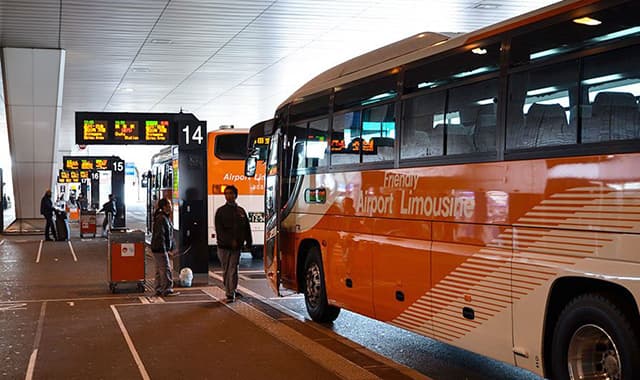
An orange Airport Limousine coach waiting at the kerb of Narita Terminal 1.

Day 2 · Tuesday, 20 July 2027

Narita Airport Terminal 1 & the Road South to Yokohama

成田国際空港 第1旅客ターミナルNarita Kokusai Kūkō Dai-ichi Ryokaku Tāminaru

Getting here: about 1 h 15 minfrom AC5 touchdown

Google Maps成田国際空港 第1旅客ターミナル— show this to the driver

Terminal 1's central building. The complex is ring-shaped and 900 m across, so its geometric centre falls on open apron — and Terminal 2 is a separate building a kilometre north-east.

The doors sigh open, someone bows, and Japan begins in traffic-cone orange.

The cabin doors sigh open and Terminal 1 takes you in — a long ribbon of glass and steel that has been receiving the world since 1978. You clear immigration beneath signage in four scripts, and the first thing that happens is not a stamp but a bow: the officer, the baggage attendant, the woman at the kiosk. Outside, Japan announces itself as heat, wet and cicada-loud. Then you find the curb, and there it is, unmistakable in traffic-cone orange — the Airport Limousine. A white-gloved loader weighs your case, tags it, hands you the stub, and bows to the departing bus. For the next hour and forty minutes you sleep and wake against the glass while Chiba dissolves into Tokyo Bay: container cranes standing like grazing herons, the long silver reach of the bridges. Then the doors open in Yokohama, and the air tastes of salt.

The story behind it

The Immovable Fire King of Narita

Twenty minutes from your gate stands Narita-san Shinshō-ji, and the airport owes the town its name. In 940 the warlord Taira no Masakado declared himself a new emperor and the Kantō plain caught fire. The court sent the monk Kanchō east carrying an image of Fudō Myō-ō — the Immovable Wisdom King, wreathed in flame, said to have been carved by Kūkai himself. Kanchō set the statue down on the Shimōsa plain and prayed. The rebellion collapsed. When the monks tried to carry Fudō home, the statue would not lift; it had become immovable in fact as well as in name. They built the temple where it stood and called it Shinshō-ji, "New Victory".

Fudō Myō-ō — Narita's own deity — is classically shown with the kurikara, the sword a dragon king coils around and swallows whole. Your voyage opens under a dragon-wrapped blade.

What people actually do here

No one will take a tip; offering one causes gentle distress. Money is not passed hand to hand but laid in a small tray on the counter, and returned the same way, often with both hands. Queues form on painted footprints without anyone being asked. And the bow you receive is not performance — return it, shallow and unhurried, and you have already said thank you correctly.

◆Terminal 1 has five satellite concourses — two of them perfect circles, a 1978 idea for parking jumbo jets nose-in around the rim.

Words you will see here

リムジンバスRimujin basu
"Limousine bus" — the orange airport coach, famous more for legroom than luxury
いらっしゃいませIrasshaimase
"Welcome, come in" — called out to every customer crossing a shop threshold
お疲れさまですOtsukaresama desu
"You must be tired" — the all-purpose acknowledgement of someone's effort
不動明王Fudō Myō-ō
The Immovable Wisdom King, flame-wreathed; the deity of nearby Narita-san
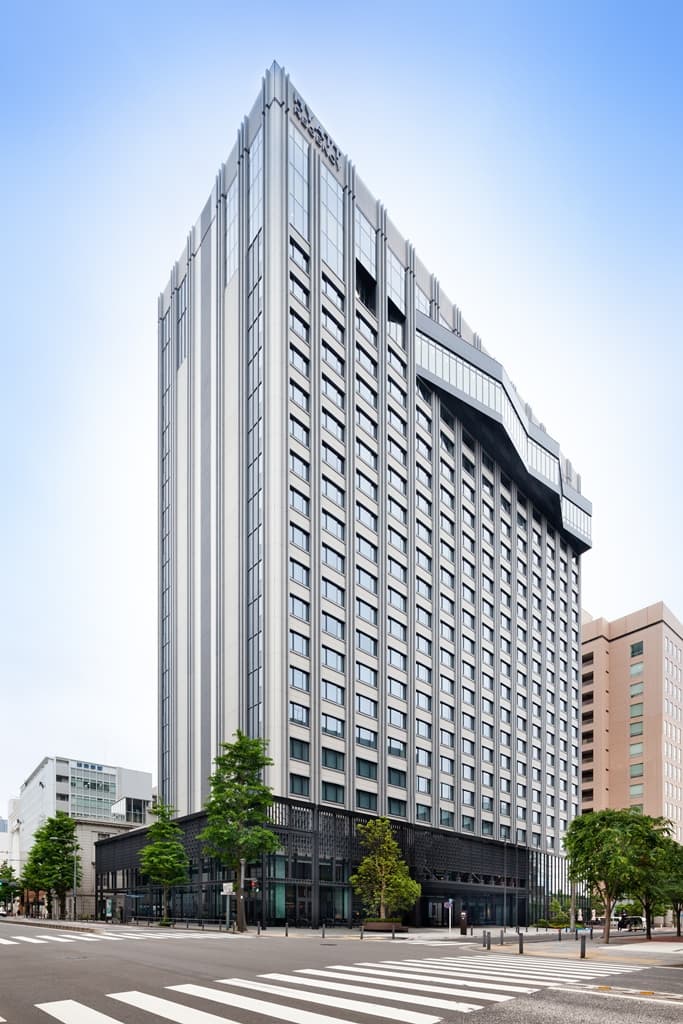
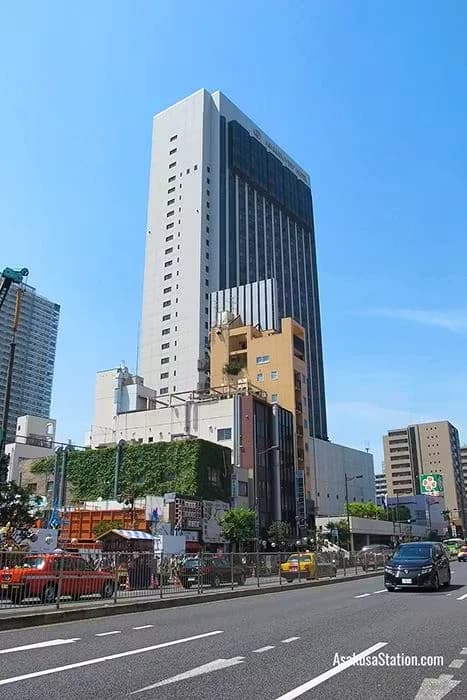
The Hyatt Regency Yokohama rising above the Minato Mirai waterfront.

Day 2 · Tuesday, 20 July 2027

Hyatt Regency Yokohama, Yamashita-chō

ハイアット リージェンシー 横浜(山下町)Haiatto Rījenshī Yokohama

Getting here: about 2 h 18 minfrom Arrivals lobby — on foot, coach, on foot, taxi

Google Mapsハイアット リージェンシー 横浜— show this to the driver

The hotel's own footprint, beside the Kanagawa Arts Theatre. A NAVITIME record for this hotel is 220 m out on the wrong block — use the pin, not a name search.

A window on the harbour, Chinatown five minutes south, your ship already waiting.

Your room sits somewhere between the third floor and the nineteenth, and what it gives you is water. Beyond the plane trees of Yamashita Park the bay opens out: the Hikawa Maru riding at her permanent mooring, the Bay Bridge drawn in white cable across the horizon, and — just there, to the left — the low pale spine of Ōsanbashi, where your ship will be. Come nightfall, Minato Mirai lights up across the harbour and the great Ferris wheel counts the minutes in neon. The hotel is new here, opened in May 2020, standing on a street that was foreign concession ground when Yokohama was Japan's one open door to the world. Step out and turn right for the sea wall. Turn left and in five minutes you are under a gate the colour of a dragon's back, and everything smells of star anise.

The story behind it

Akai Kutsu — The Girl in the Red Shoes

On the sea wall in Yamashita Park sits a small bronze girl in red shoes, looking out at the water. She comes from a 1922 children's poem by Noguchi Ujō about a girl carried away overseas by a foreigner. Since a long investigation in the 1970s she has been identified with Iwasaki Kimi (1902–1911), given by her mother to American missionaries named Hewitt. When Kimi fell ill with tuberculosis the Hewitts sailed without her, and she died at nine in an orphanage in Azabu. Her mother went to her own grave believing her daughter had crossed this ocean. Some writers dispute the identification entirely — but the statue keeps watching the sea.

From this window you can trace tomorrow's whole dragon-road: Ōsanbashi's whale-back to the north, and five minutes south the Azure Dragon gate on Chinatown's eastern edge.

What people actually do here

Evening in Yamashita Park has its own quiet choreography: couples walk the sea wall from the Red Shoes girl to the Hikawa Maru and back, buskers set up under the plane trees, and almost nobody eats while walking — food is finished standing beside the stall that sold it. Public bins are scarce, so people simply carry their rubbish home.

◆Yamashita Park is built on rubble from the 1923 Great Kantō Earthquake — the city swept its own ruins into the sea and planted a promenade on top.

Words you will see here

みなとみらいMinato Mirai
"Harbour of the future" — the glass skyline across the water from your window
山下公園Yamashita-kōen
The seafront park below the hotel, opened in 1930 on earthquake rubble
氷川丸Hikawa Maru
1930 NYK liner moored permanently at the park, now a museum ship
関内Kannai
"Inside the barrier" — old name for Yokohama's foreign settlement quarter
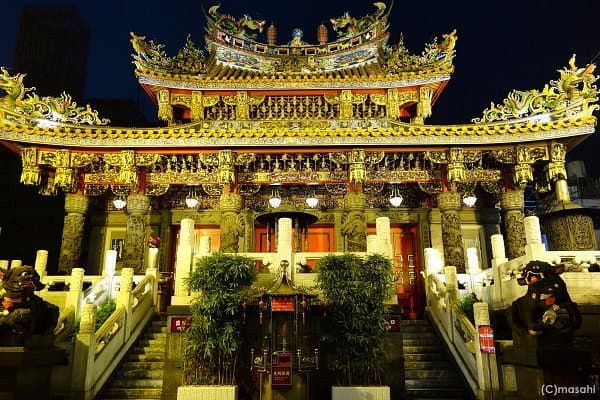
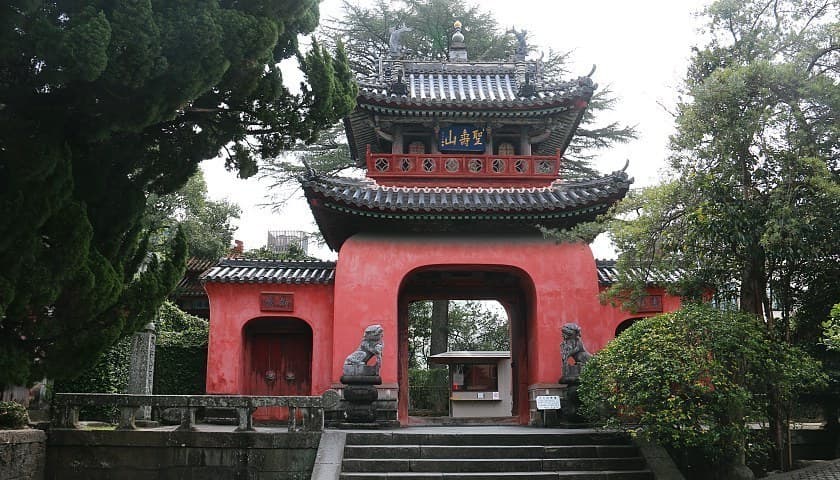
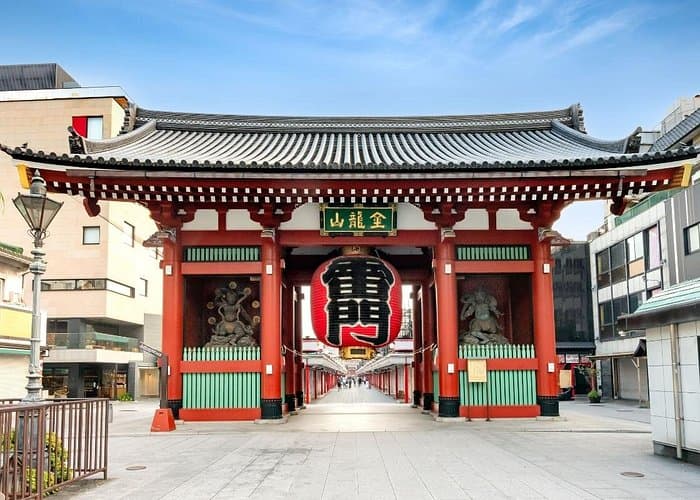
The ornate painted gate and dragon roof carvings of Kanteibyo Temple.

Day 2 · Tuesday evening — and back on Wednesday morning

Yokohama Chinatown — Kanteibyō & the Fortune Hall

横浜中華街・関帝廟Yokohama Chūkagai · Kanteibyō

Getting here: about 35 minfrom Hotel forecourt

Google Maps横濱關帝廟— show this to the driver

Kanteibyō, the red-and-gold temple to Guan Yu founded here in 1862. Do not confuse it with Mazu-byō, an equally ornate Chinese temple 220 m east — that one is the 2006 sea-goddess hall. And the fortune salon is a separate address several blocks further east, so pin the branch you actually booked rather than assuming it is here.

Five sticks of incense for a war god, and a stranger reads your hand in the morning.

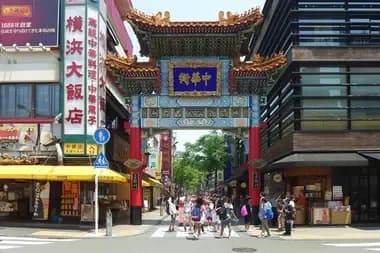
You come in under Chōyōmon, the eastern gate, painted the blue-green of an azure dragon, and the temperature of the evening changes. Five hundred-odd kitchens are working at once: pork buns steaming in towers, roast duck lacquered in the windows, sugar and sesame and hot oil. Overhead the lanterns are already lit in long red rows, which is the hour this street is built for. Then, up a side street, gold explodes. Kanteibyō is all carved dragons and glazed tile, floodlit after dark and unapologetically loud. You buy five sticks of incense, light them at the great censer, fan the flame out rather than blow it, and walk the burners in order. Then supper, and bed. The fortune hall keeps until tomorrow — Airi opens at ten, and on Wednesday morning you walk back into these same lanes from the sea goddess's temple two streets south and are the first customers through the door. A curtained booth, a small table, a woman who turns your hand over and studies the palm before she touches the cards. Twenty minutes of tarot each, and the lines in your hand. You will argue about it on the ship, and again at sea.

The story behind it

Guan Yu, the God Merchants Trust

Kanteibyō enshrines Guan Yu, a general of the collapsing Han dynasty who died in 220 and has been climbing the ranks of heaven ever since — sworn brother, sworn defender, eventually a god. The novel Romance of the Three Kingdoms gave him a red face, a long beard and the Green Dragon Crescent Blade, forged, the story says, when a green dragon flew over the smithy and was cut apart into the steel. Historians doubt the weapon ever existed; that style of polearm postdates him by centuries. It hardly matters. Merchants adopted him not for war but for his absolute reliability with a promise and a ledger, and pray to him now for prosperity, honest dealing and safe returns.

You enter through the Azure Dragon's gate and pray to a god whose blade was legendarily forged from a green dragon that flew over the smithy at exactly the wrong moment.

What people actually do here

Buy a set of five incense sticks at the reception desk. Light them at the great censer in the forecourt, and put the flame out by fanning, never by blowing. Then place one stick in each of the five burners, in order: the Jade Emperor, then Guan Yu, then Di Mu Niang Niang, then Guan Yin, then Fu De Zheng Shen. Bow, and say what you came to say.

◆The hall you enter is the fourth Kanteibyō. Fire destroyed the third on New Year's Day 1986 — but the three deity statues survived it, and are still here.

Words you will see here

関帝廟Kanteibyō
"Temple of Emperor Guan" — Chinatown's central place of worship
朝陽門Chōyōmon
The blue east gate, guarded by Seiryū, the Azure Dragon of spring
手相Tesō
Palm-reading; the lines of the hand, and what Airi actually offers alongside the tarot
占いUranai
Fortune-telling; an uranai-kan 占い館 is a fortune-telling hall

03

Day

横浜・乗船

Wednesday, 21 July 2027Ashore

Yokohama & Embarkation

The sea goddess, eight minutes from the door

Enoshima was two and a half hours in a taxi and seven hundred steps for a dragon hall. Eight minutes' walk from the hotel there is a temple to Mazu, the goddess who calms the sea and brings sailors home — dragons the whole length of the gate and along the roof ridge, and on a Wednesday a tai chi circle in the courtyard at nine. It ends at ten, which is the minute the fortune hall five minutes north unlocks its door, so the tarot happens here rather than in a rush on the Tuesday night. Then the whale's back, and the ship. Lines go at 15:00.

Yokohama Ōsanbashi — embarkation day

Boarding from

12:00

Be there by

12:30

check-in closes 14:00

Ship sails

15:00

Embarkation is stricter than a port day: check-in runs 12:00 to 14:00 and Princess states that if you arrive after it closes you will not be allowed to board. Yokohama also uses assigned Arrival Groups — you pick a staggered window in the Princess app about thirty days out, and arriving early only buys you the right to drop bags and wait. This day is timed to be at the terminal by twenty past eleven and through the desks in the first minutes of the noon window, which means the whale's back happens before check-in rather than instead of it. One thing worth knowing before you walk in: once you have checked in you cannot go back ashore, so do any last errand first.

Today the binding hour is not the ship sailing but check-in closing — so the big number is ninety minutes before 14:00, not before 15:00. Princess sails on schedule and says in writing that she may do it with no announcement; there is no last call. And on a Japan round trip Princess Japan does not accept boarding at a later port, so there is nothing to catch her up from. Both times here are derived from the published sailing time — the binding one is in the Princess app and on the gangway sign that morning.

Warning for this day: The easiest morning of the whole trip, and the one that quietly rescues the fortune reading. The brief sent you to Enoshima — two and a half hours in a taxi, seven hundred-odd steps, an escalator that only runs upward, and a boat back that does not sail until eleven. It has been cut. What replaces it all happens inside a ten-minute walking radius of the hotel door: incense at the sea goddess's temple from twenty to nine, the free Wednesday tai chi circle from nine to ten, and then Airi — which opens at ten, five minutes away — for the tarot the Tuesday evening could never hold. Longest drive today is seven minutes, at twenty past eleven, to the pier. One correction worth having in advance: an earlier version of this day had you aboard by 11:15, which cannot happen — check-in does not open until noon and Yokohama runs assigned Arrival Groups, so turning up at half past ten buys you a bench, not a cabin.

Every move you make today12 legs · 4 h 39 min moving
  1. 08:00

    On foot15 minarrive 08:15

    The room to 1F bell desk — check out, bags stored

    Check out and hand both cases to the bell desk. You carry nothing at all this morning, and you do not come back for them until half past ten.

  2. 08:25

    On foot9 min800 marrive 08:34

    Hyatt Regency Yokohama to Yokohama Masōbyō — 横濱媽祖廟, Yamashita-chō 136

    South through Chinatown's back streets, still shaded and still cool at this hour. No car, no driver, no meter — the whole morning happens inside a ten-minute walking radius of the hotel door.

    Mazu is the Chinese goddess who calms the sea and brings sailors home — Watatsumi's opposite number, and the one who came to this harbour with the ships. The temple was consecrated in 2006 from the Grand Mazu Temple in Tainan. Dragons run the length of the gate, along the roof ridge and around the balustrade.

  3. 08:40

    No travel1 h 20 minarrive 10:00

    Yokohama Masōbyō to Incense, dragons, and the Wednesday tai chi

    Opens 09:00, grounds free. Buy the five-stick incense set at the desk (¥500) and walk the five numbered censers in order. Then the courtyard: a free tai chi circle meets there Wednesdays and Saturdays 09:00–10:00, reception from 08:45, no booking, and visitors who simply turn up are welcome. Join it or sit and watch it.

    21 July 2027 is a Wednesday, which is why this works. Reception opens 08:45 and the circle runs 09:00 to 10:00, so the twenty minutes before it are the incense and the dragons and the hour after is the tai chi. It finishes at ten on the dot, which is the minute the fortune hall five minutes away opens its doors — the two halves of this morning fit together with nothing left over. The circle pauses through August; July is in season. Worth telephoning ahead to confirm it is still running.

    Check this: The courtyard is at street level and everything worth seeing — the gate, the roof, the censers — works from it. What could not be confirmed is the step situation at the main hall door itself: these are raised-platform Chinese temples and usually have a raised sill. Assume a step or two there, and do not plan on getting inside.

  4. 10:00

    On foot5 min400 marrive 10:05

    Yokohama Masōbyō to Uranai Yakata Airi — 占い館 愛梨

    North through Chinatown's inner lanes, level the whole way. Three branches, all a few doors apart: the main store in the Kamome market at Yamashita-chō 187, the Shanghai Road branch at 192-2, and the Tenchōmon branch also at 187 on Kanteibyō-dōri.

    Kanteibyō is on the way and has the better dragon carvings in daylight — cloud-dragon stone, dragon pillars, Taiwanese roof tiles. You saw it lit up last night, so put your head in for two minutes or walk straight past.

    Check this: Ask for the Shanghai Road or Tenchōmon branch rather than the main store: 本店 is on the 2F of the Kamome market building, and no lift is documented. All three keep the same hours.

  5. 10:05

    No travel55 minarrive 11:00

    Uranai Yakata Airi to The tarot, and the lines in your hand

    Twenty minutes of tarot each, and the palm reading that comes with it — a curtained booth, a small table, and somebody who turns your hand over before she touches the cards. Palm reading from about ¥1,000; tarot priced by reader.

    Ten o'clock is opening time, so you are the first customers of the day and there is no queue in front of you — which is exactly what the Tuesday evening could not offer at any price.

    Check this: Book it, and book it before you fly: reservations go through their own site at coubic.com/irieuranai, and a named reader has to be requested in advance. Weekday hours are 10:00 to 20:00 with last reception at 19:30 — confirmed on their own site, and the reason this reading is on Wednesday morning rather than Tuesday night. Two things to settle when you book: ask whether they can read in English, because nothing on their site says they can, and note that the brief's promised "face analysis" is not on the published menu — what Airi sells is tarot and palm reading.

  6. 11:00

    On foot8 min700 marrive 11:08

    Uranai Yakata Airi to Hyatt Regency Yokohama, to collect the luggage

    Back north through the block, uphill in temperature only.

    Twelve minutes at the bell desk before the car: a cold drink, the bags, the bathroom, and no clock.

  7. 11:20

    Taxi7 min1.3 kmarrive 11:27

    Hyatt Regency Yokohama to Ōsanbashi terminal, 2F set-down

    Private taxi with the luggage along the Yamashita Park frontage and Kaigan-dōri, then up the vehicle ramp.

    Check this: The brief puts the hotel 0.5 km from the pier. Hyatt's own page says 0.75 km.

  8. 11:27

    On foot5 min200 marrive 11:32

    2F set-down to CIQ Plaza and the Princess desks

    Porters take the cases at the car. You walk the same level to the departure lobby.

    Taxi rank, ticket counter, immigration lobby and CIQ Plaza are all on 2F — there is no level change here at all, and the terminal is lifts and ramps throughout. Only the car park is on 1F.

  9. 11:32

    No travel25 minarrive 11:57

    The terminal roof to The whale's back, before you are anybody's passenger

    Out onto kujira no senaka — Brazilian ipe decking, no columns, no steps, no right angles, open to anyone twenty-four hours a day. Your ship fills the northern edge close enough to read her rivets.

    Do this now, not later. Once you have checked in you cannot come back ashore, and the rooftop is on the wrong side of that line — which is exactly the mistake the earlier version of this day made by putting you aboard at a quarter past eleven. Twenty-five minutes rather than thirty is the only thing the fortune reading cost this morning, and the roof is open around the clock if you would rather have it back.

  10. 12:00

    No travel30 minarrive 12:30

    CIQ Plaza to Checked in — Arrival Group window, desks, security, CIQ

    Medallion collection or pickup, passports, the security screen and the boarding gate. This is a transaction with a queue behind it, not a doorway.

    Check this: Your assigned Arrival Group governs when you may join this queue — it is picked in the app about thirty days out, and if you do not pick one it is picked for you 24 hours ahead. Pick the earliest window offered. Check-in closes at 14:00 and Princess states in writing that arriving after it closes means not boarding.

  11. 12:30

    On foot20 min500 marrive about 12:50

    Boarding gate to Balcony stateroom, Diamond Princess

    Gangway, then the ship's own corridors and lifts.

    Ōsanbashi is a long finger pier and the ship is 290 metres, so the walk is real. Aboard about ten to one — seventy minutes before check-in closes, with lunch and the sail-away still ahead of you.

  12. 13:00

    No travel20 minarrive 13:20

    Aboard to Book the Izumi bath for the sea day

    The spa desk, before lunch on the first afternoon. Capacity is capped near thirty across 818 m² and the sea-day passes are the ones that sell out — this is the single booking that has to be made today rather than later.

    About US$39 for a two-hour session, US$49 for a day pass. Not covered by Princess Premier.

  13. 15:00

    Aboard ship

    Ōsanbashi Pier, Yokohama to Under way

    Diamond Princess, seven nights, round trip.

    Streamers off the rails, Hotaru no Hikari on the quay, and the wooden deck slides away from you.

One of Yokohama Chinatown's painted street gates, on the eight-minute walk down to the Mazu temple.

Day 3 · Wednesday, 21 July 2027 · morning

Yokohama Masōbyō — the Temple of the Sea Goddess

橫濱媽祖廟Yokohama Masobyō

Getting here: about 24 minfrom The room

Google Maps橫濱媽祖廟(山下町136)— show this to the driver

The Mazu temple on Chinatown's east side, 220 m east of Kanteibyō. The two are easy to swap — Kanteibyō is the 1862 red-and-gold hall to Guan Yu, this is the 2006 sea-goddess one.

Eight minutes from the hotel door, a goddess who calms water and brings sailors home.

You come back into Chinatown at nine in the morning, when it belongs to the people who live in it — shutters going up, deliveries, the smell of stock pots rather than fryers. The temple is newer than everything around it and does not care: consecrated in 2006 with fire carried from the Grand Mazu Temple at Tainan, it goes up in tiers of glazed tile and gold, and there are dragons the entire length of the gate, along the roof ridge and around the balustrade. You buy five sticks of incense at the desk and walk the censers in order. And on a Wednesday morning the courtyard is not empty: a tai chi circle meets here at nine, an hour of very slow movement in the shade, and nobody minds if you join the back row or simply sit on the step and watch. Then you walk eight minutes back, collect the bags, and go and get on a ship. It is the correct order to do things in.

The story behind it

Lin Moniang, Who Walked Out Over the Water

Mazu was a real girl before she was a goddess. Lin Moniang was born on Meizhou island off Fujian around 960 — the silent one, they called her, because she did not cry as an infant. She could swim, which was rare, and she could read weather, which was rarer, and she stood on the shore in red so the fishing boats could find their way in. The story everyone tells is this: while she sat weaving, her mind went out to sea, where her father and brothers were caught in a storm, and she held them up. Her mother shook her awake. Her grip loosened, and her father drowned. She died young, and the sailors of the Fujian coast, who had watched her do impossible things, began praying to her instead of for her. A thousand years later she is Tianhou, Empress of Heaven, and there is a temple to her in every harbour the Chinese ever sailed into — including this one.

You are asking the goddess of the sea for a safe crossing on the morning you board, under a gate carved end to end with her dragons. Watatsumi rules this water from below; Mazu is who you ask about it from above.

What people actually do here

Buy the five-stick set at the reception desk, light them at the great censer, and put the flame out by fanning rather than blowing. Then one stick to each of the five burners, in order. The courtyard is the temple, in practice: the incense, the dragons and the roof all work from it, which is just as well because these are raised-platform halls and there is usually a sill at the door.

◆The tai chi circle in the courtyard runs Wednesdays and Saturdays from nine, free, no booking, visitors welcome — and pauses for the whole of August. You are here in July, on a Wednesday.

Words you will see here

媽祖Mazu
The sea goddess of the Chinese coast — protector of sailors, calmer of storms
天后Tenkō
"Empress of Heaven" — Mazu's imperial title, and the name on many of her temples
林默娘Rin Mokunyō
Lin Moniang, the Fujianese girl of the 10th century who became Mazu
太極拳Taikyokuken
Tai chi — the slow-moving form practised in the courtyard on Wednesday mornings
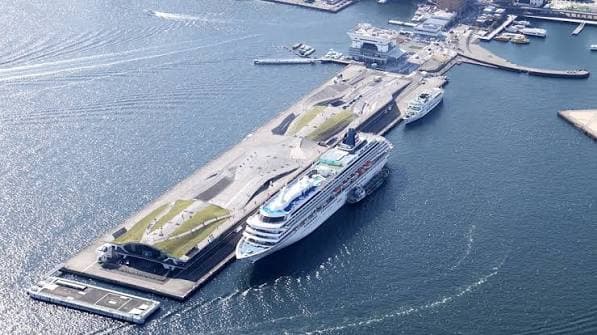
The Diamond Princess berthed along the timber deck of Osanbashi Pier.

Day 3 · Wednesday, 21 July 2027

Ōsanbashi Pier — the Whale's Back

横浜港大さん橋国際客船ターミナルYokohama-kō Ōsanbashi Kokusai Kyakusen Tāminaru

Getting here: about 1 h 20 minfrom Yokohama Masōbyō — on foot, taxi, on foot

Google Maps横浜港大さん橋国際客船ターミナル— show this to the driver

This pin is out on the wooden roof deck, which is where you want to be for the view. Arriving by taxi with luggage, ask for the 2F set-down at the landward end — a two-to-three-minute walk from here.

A wooden deck with no pillars and no straight lines, and a white wall of ship.

Ōsanbashi does not look like a terminal. It looks like something surfacing. You walk up a ramp and out onto a rooftop of Brazilian ipe, warm underfoot, folded and rippling like a dune — no columns anywhere, no steps, no right angles, grass growing in the hollows. Yokohama named it kujira no senaka, the whale's back, and once you are standing on it you cannot unsee the animal. To one side Minato Mirai stacks itself into the sky; to the other, the Bay Bridge. And filling the whole northern edge, close enough to read her rivets, Diamond Princess — 115,875 tons of her, built in Nagasaki, the first Princess ship ever launched from a Japanese yard. At 15:00 the horn goes, a note you feel in your sternum, and it is the wooden deck that slides away from you, and Japan begins to move.

The story behind it

Ryūgū-jō, the Palace Under the Sea

Everything from here is the sea-dragon's country. The Kojiki tells how Hoori, searching for a lost fishhook, went down to Ryūgū-jō, the dragon palace of Watatsumi, god of the sea, and stayed three years that felt like days. He married Watatsumi's daughter Toyotama-hime and was sent home with the tide jewels — one to raise the water, one to lower it. When Toyotama-hime came ashore to give birth she begged him not to look. He looked, and saw a wani, a great sea-serpent, and she fled back into the water for ever. Their grandson, the chronicles say, became Japan's first emperor.

The whale's back carries you to the water's edge, and beyond it the dragon king's country begins. You spent the morning under Mazu's dragons asking the goddess of the sea for a safe crossing, which is precisely what this pier is for.

What people actually do here

Japanese sailings keep the old rituals where they can. Coloured paper streamers are thrown from the rails so that ship and shore are stitched together — and are meant to break, which is the point. As the lines come off, the port plays Hotaru no Hikari, Japan's farewell tune and the same melody as Auld Lang Syne. Nobody stops waving until faces are gone.

◆The rooftop got its nickname kujira no senaka, "whale's back", by public vote on 4 December 2006, chosen from 3,995 suggestions.

Words you will see here

大さん橋Ōsanbashi
"The great pier" — Yokohama's international passenger terminal, rebuilt 2002
くじらのせなかKujira no senaka
"The whale's back" — the rooftop deck, open to anyone, 24 hours a day
綿津見Watatsumi
The sea-dragon god whose palace lies beneath the water you are sailing over
蛍の光Hotaru no hikari
"Light of the fireflies" — the Japanese farewell song, played at castoff

04

Day

鳥羽

Thursday, 22 July 2027Port of call

Toba

Two rocks, a rope, and the Dragon Palace itself

Up at seven, because everything outdoors today happens before nine. Ashore by tender and ten minutes west by taxi to the wedded rocks — the husband rock, the wife rock, thirty-five metres of rice-straw rope slung between them, and frogs the whole length of the path, because kaeru means both frog and safe return. The shrine office opens at seven, so the fortunes come out of a frog's mouth while the promenade is still in shade. Then two hundred flat metres east to the little vermillion shrine named for the dragon king's palace. Back for a boat that was built to be that palace, and the air-conditioned aquarium it sets you down beside.

Toba — at anchor, ashore by tender

Ashore from

07:00

Be back by

14:30

ship's last tender 15:00

Ship sails

16:00

The deadline here is not "be on the ship" but "be on the last boat leaving the pier", and that queue is at its worst on the final runs. The last tender has to leave before all-aboard, not at it — the crossing alone is twelve minutes — so it is shown here at 15:00 and the real figure is the one printed in the Patter that morning. The day is built so that none of it matters: you are back at the Marine Terminal by one and on the 13:25 tender, with an hour and a half still in hand.

The big number is ours, not the ship’s — ninety minutes before she sails rather than the thirty Princess asks for. Princess sails on schedule and says in writing that she may do it with no announcement; there is no last call. And on a Japan round trip Princess Japan does not accept boarding at a later port, so there is nothing to catch her up from. Both times here are derived from the published sailing time — the binding one is in the Princess app and on the gangway sign that morning.

Warning for this day: An early start, and it buys you the whole day. Futami is the original Toba plan and it is back where it belongs — but at a quarter to eight rather than mid-morning, because it is a bare seafront promenade with no shade and no benches, and by eleven it is punishing. The shrine office opens at seven, so the frog fortunes, the goshuin and the salt-grass purification are all available when you get there. Then back for the boat named 龍宮城, built as the Dragon Palace itself, and the air-conditioned aquarium it sets you down beside. Two short taxi rides, both under ten minutes, and everything else is on the water or indoors.

Every move you make today18 legs · 6 h 49 min moving
  1. 07:00

    On foot10 min250 marrive 07:10

    Stateroom to Tender platform, Deck 4

    Corridor and lift down to the shell door. Let the tour groups clear first — there is no hurry today at all.

    The one early start of the cruise, and it is what makes the rest of the day easy. Each of you collects your own numbered tender ticket in the first wave; one person cannot collect both.

  2. 07:15

    Ship's tender15 min2 kmarrive 07:30

    At anchor, Toba Bay to Toba Marine Terminal pontoon

    The ship's own tender. No quay at Toba takes a 290-metre ship, so this is the only way in.

  3. 07:35

    Taxi10 min7.5 kmarrive 07:45

    Toba Marine Terminal to Futami Okitama Shrine — 二見興玉神社

    Pre-booked car from the terminal rank along the coast road. Ask for 二見興玉神社 表参道入口 — the WEST entrance torii, not the east — and have him come back for you at 08:55.

    The shrine's own access page gives 7.5 km and about ten minutes at ¥2,500–3,000; the original planning document said fifteen. Either way it is comfortably inside the drive rule, and the sandō is deliberately thin gravel kept shallow for wheelchairs.

  4. 07:45

    No travel50 minarrive 08:35

    Futami Okitama Shrine to The wedded rocks, the frogs, and a fortune out of a frog's mouth

    The shore path west to east: the husband rock nine metres out with its little torii, the wife rock beside him, and thirty-five metres of braided rice-straw rope slung between them over open water. Frog after frog after frog along the way — Sarutahiko's messengers, and a pun, because kaeru means both "frog" and "to return". Draw the kaeru-mikuji at the shrine office, tugging the slip out of a frog's mouth.

    Quarter to eight is the whole trick. The office opens at 07:00, so the fortunes, the goshuin and the hamasangu purification with salt grass are all available — and the promenade is still in shade and still bearable. By eleven it would be neither.

    Check this: There is no shade and there are no benches on this path at any hour. Hats and water before you get out of the car, not after.

  5. 08:35

    On foot10 min200 marrive 08:45

    Futami Okitama Shrine to Ryūgūsha — 龍宮社, at the tideline

    Two hundred metres further east along the same flat shore path, past the last of the frogs, until the walkway runs out at the water.

    Vermillion hall, green roof, and no gap at all between it and the ocean. Watatsumi Ōkami lives here — the sea kami Japan reads as Ryūjin the dragon, and the shrine is named for his palace. Two bows, two claps, one bow, straight out over the bay.

  6. 08:45

    No travel10 minarrive 08:55

    Ryūgūsha to The mochi shops on the way back

    Back up the approach, where the steamers are going. Futami's own is ofuku-mochi, wave-shaped and filled with bean paste.

    Check this: Ryūgūsha keeps its own posted hours of roughly 09:00–16:00 for anything handed over a counter, so at this hour it is the hall and the sea rather than a stamp. The main shrine office behind you has been open since seven if you want both.

  7. 08:55

    Taxi10 min7.5 kmarrive 09:05

    Futami to Toba Marine Terminal

    The same held car back along the coast.

  8. 09:05

    No travel20 minarrive 09:25

    Toba Marine Terminal to The 2F lounge, and the cruise ticket counter

    Back indoors and out of the sun. The 2F exchange lounge has bay windows over the bay, coffee and Ise udon. Buy the bay-cruise tickets at the 1F counter, ¥2,400 each.

    Check this: Use the terminal's accessible toilet before you board — there is no toilet at all on the boat. And ask the counter which vessel is on your sailing: if it is the little Mitsushima, take the next departure instead. It has a 66 cm door and internal stairs, and in summer the boats run every half hour, so waiting costs you nothing.

  9. 09:25

    On foot10 min100–150 marrive 09:35

    Terminal lobby to Pier 1 — 1番のりば

    Through to the boarding pontoon. All of it indoors or under the pier roof.

    This is the farthest pier in the complex rather than a door off the lobby, and the barrier-free centre tells visitors to allow extra time for it. Ten minutes at your own pace, not three.

  10. 09:35

    No travel25 minarrive 10:00

    Pier 1 to On the pontoon, a clear quarter of an hour early

    The covered ramp down, the tide-dependent gradient, the step-over threshold at the door, and staff finding you a seat at the rear of the 1F cabin.

    Check this: The operator's own instruction is 出航時刻の15分前までにお越しください — be here fifteen minutes before departure. An earlier draft of this day had the walk to Pier 1 ending at the exact minute the boat left, which is not a connection. Summer sailings go on the hour and the half hour from 09:00 to 16:00, so if you miss one the next is thirty minutes away and the day still works.

  11. 10:00

    Passenger boat35 minarrive 10:35

    Toba Marine Terminal to Pearl Island & Aquarium pier, aboard the Ryūgū-jō

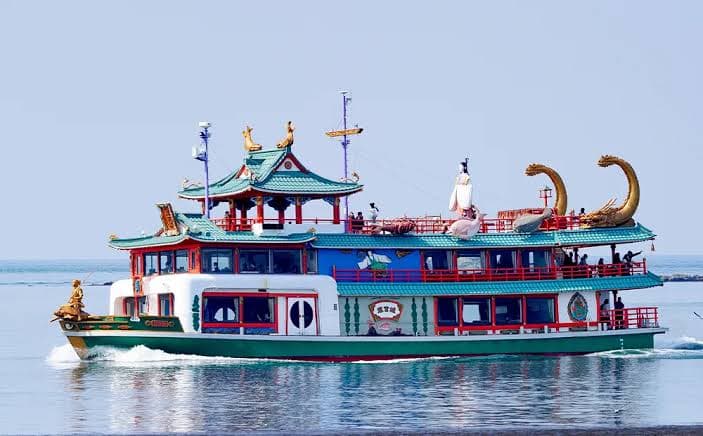
    鳥羽湾めぐり遊覧船「龍宮城」 — a 360-passenger sightseeing boat built as the undersea Dragon Palace itself, with Urashima Tarō and Princess Otohime standing on the superstructure. Sit at the REAR of the 1F cabin.

    This is the whole voyage's theme, afloat and seated: not a shrine to the dragon king but his palace, with the story's two characters on the roof. The castle is on the outside, so you get all of it from your seat and from the pier — the 2F Otohime throne room and the 3F deck are stairs only and cost you nothing to skip. The boat calls at Dolphin Island on the way; stay aboard. The full loop is about fifty minutes, of which this is the long leg.

    Check this: A covered ramp down to a floating pontoon — the gradient changes with the tide — then one step-over threshold at the door, with staff on hand. The front of the 1F cabin has two low steps; only the rear is genuinely step-free.

  12. 10:35

    On foot15 minarrive 10:50

    Pearl Island & Aquarium pier to Toba Aquarium, barrier-free entrance

    Off the boat with 360 other people, across to the highway-side entrance beside the ticket window, and two tickets at ¥2,800 each.

    Not five minutes. Disembarking a full sightseeing boat down a floating pontoon takes as long as boarding it did, and there is a ticket window at the far end of it. The aquarium has been open since 09:30, so nothing here is waiting on you.

  13. 10:50

    No travel2 harrive 12:50

    Toba Aquarium to The mermaid, and the Dragon Palace's messenger

    鳥羽水族館 — indoor, air-conditioned, and one of the largest in Japan. Use the barrier-free entrance rather than the 2F stair-and-escalator front door.

    Sixteen wheelchairs and three electric carts are lent free at the door, no reservation and nobody thinks anything of it. There is deliberately no fixed route, so take the short version: first 人魚の海, the Sea of Mermaids, for Serena — the only dugong in Japan, in the tank the aquarium named for the legend she is supposed to have started, and as of April 2026 thirty-nine years in residence, which is the world record. Then marine mammals, then the seated indoor sea-lion show, then the Ancient Sea. Skip Jungle World and Japanese Rivers. Lunch inside around 11:45, before the crowd. And look for the ryūgū-no-tsukai if it is in: the oarfish, whose name means Messenger of the Dragon Palace.

    Check this: Two things. Ramps run throughout but the aquarium's own page is honest that a few spots still need stairs and a few tanks cannot be approached — that is normal here, turn round and go another way. And the sea-lion show runs to fixed times that are posted at the entrance and change with the season: read the board on the way in and build the two hours around it, rather than hoping to walk into one.

  14. 12:50

    Taxi10 min1.2 kmarrive 13:00

    Toba Aquarium to Toba Marine Terminal

    Four minutes by road from the aquarium's own rank, rather than waiting for the next sailing.

    Check this: Do not walk this. The terminal is about 1.2 km away, 17–20 minutes on unshaded Route 42 roadside, which is exactly the kind of leg this day is built to avoid. The sightseeing boat also comes back here, but its return leg is timetabled rather than on demand — the taxi is the one that fits the tender.

  15. 13:00

    No travel15 minarrive 13:15

    Toba Marine Terminal to Waiting comfortably, with the whole afternoon in hand

    The 2F lounge again, or the roofed benches at Kamome Hiroba just outside for air on your faces. Souvenirs at Toba Ichibangai are a four-minute taxi, not the walk the guidebooks claim.

  16. 13:15

    On foot6 min200 marrive 13:21

    Terminal to Tender pontoon

    Cruise card scanned and bags checked by ship's security on the quay.

  17. 13:25

    Ship's tender30 min including the queue2 kmarrive about 13:55

    Toba Marine Terminal to Diamond Princess at anchor

    Return tender. No ticket needed coming back, but the queue builds through the last two hours.

    Check this: Toba's anchorage is exposed and tendering gets suspended in wind or swell — the failure mode here is weather, and it gives no warning. This is why the day takes the 13:25 boat and not one of the last three: aboard about two o'clock, half an hour inside our own deadline, an hour and a half before the last boat and two hours before she sails. If it is blowing, go straight back after the aquarium and read in the lounge on board.

  18. ·

    On foot8 min250 m

    Deck 4 to Stateroom

    Shell door, lift lobby, corridor.

    About 1.5 km on foot across the entire day, flat, and everything outdoors done before nine in the morning.

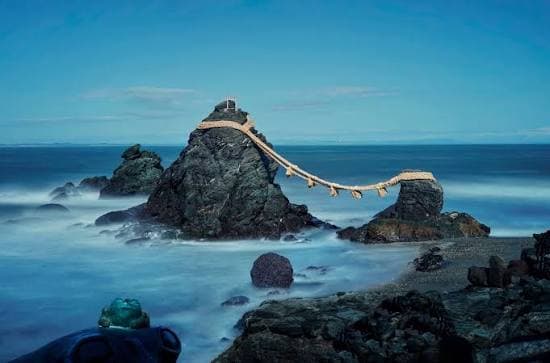
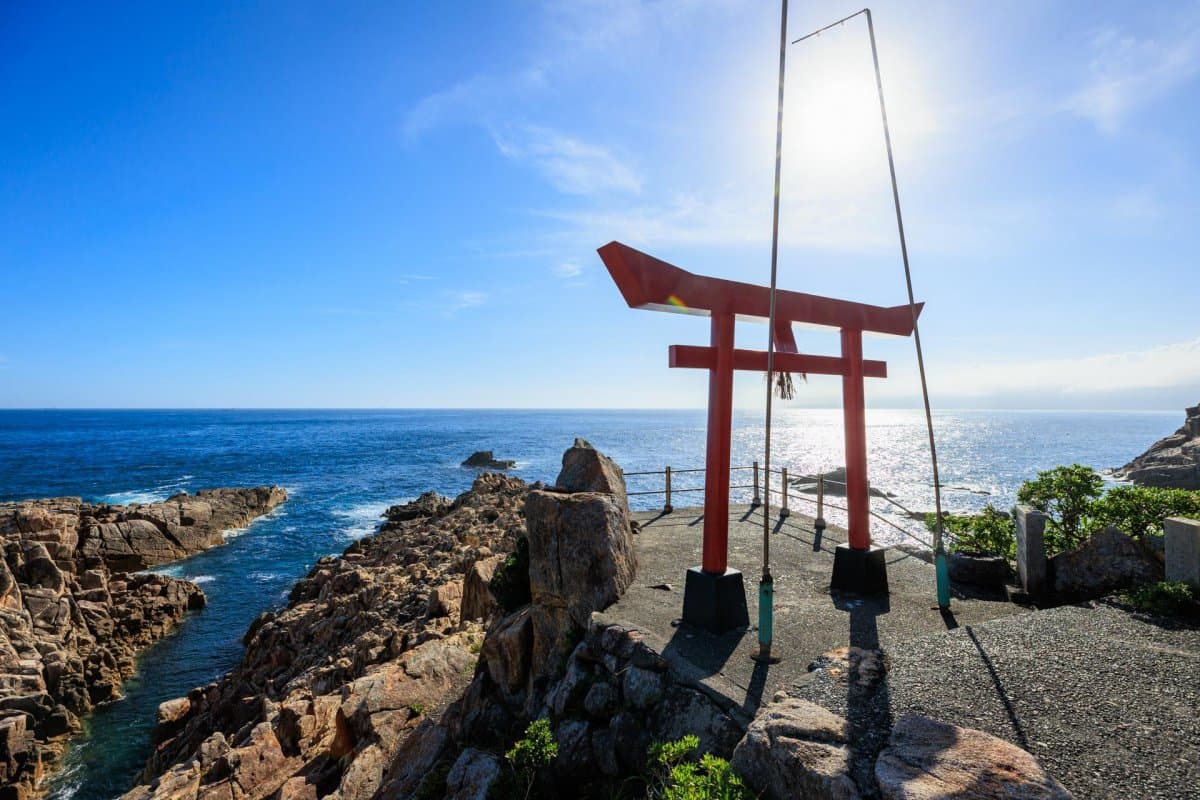
The Wedded Rocks at Futami, joined above the water by a heavy straw shimenawa rope.

Day 4 · Thursday, 22 July 2027

Futami Okitama Shrine & the Wedded Rocks

二見興玉神社・夫婦岩Futami Okitama-jinja / Meoto Iwa

Getting here: about 35 minfrom Stateroom — on foot, ship's tender, taxi

Google Maps二見興玉神社(夫婦岩)— show this to the driver

The shrine hall. The rocks stand 56 m offshore and there is no land access to them — you view them from the forecourt, so this is the pin to give a driver. Cars cannot enter the precinct.

Two rocks bound by a rice-straw rope, married since the making of the world.

The tender noses into Toba and the bay opens flat and silver. A short ride west, the pines of Futamiura part, and there they are: the husband rock shouldering nine metres out of the shallows with a small torii on its crown, the wife rock low beside him, and slung between them the shimenawa — thirty-five metres of braided rice straw in five great strands, sagging, lifting, dripping over open water. You walk the shore path past frog after frog after frog. At the purification basin, water pours over a frog's back for wishes granted; at the shrine office you draw a kaeru-mikuji, tugging your fortune out of a frog's mouth. Unfold it. And somewhere out there, roughly seven hundred metres offshore and usually drowned, lies the rock this whole shrine is actually facing.

The story behind it

The Rope, the Pair, and the Rock You Cannot See

Japan's first story begins on the floating bridge of heaven. Izanagi and Izanami stir the brine with a jewelled spear; the drops that fall from its tip harden into the first island. There they marry, and go on to bear the islands of Japan and a host of kami — the mountains, the winds, the sea. The Wedded Rocks are read as that pair made stone: the tall husband, the smaller wife, joined by a rope no tide unties. But the rocks are not the object of worship. They stand as a torii, a frame — the true sacred body is Okitama Shingan, a submerged stone offshore where Sarutahiko Ōkami, the towering crossroads-kami who guided the heavenly grandchild down to earth, is said to have come ashore.

The pair who made the islands also fathered the sea-kami. Their rope hangs over the water you are sailing — and the dragon's own shrine waits two hundred metres east along this same shore path.

What people actually do here

Futami is where pilgrims cleanse before going on to Ise. That is hamasangu: once you waded into this bay; today the priests purify you at the shrine office with mukushiogusa, "unblemished salt grass" gathered from the sacred rock. You take a sprig home as a talisman or steep it in your bath. And walk through the torii at its side — the centre is the kami's own path.

◆Frogs here are Sarutahiko's messengers and a pun: kaeru means both "frog" and "to return" — hence charms for safe returns and money coming back.

Words you will see here

夫婦岩Meoto Iwa
"Wedded Rocks" — literally the husband-and-wife rocks
注連縄shimenawa
Sacred rice-straw rope marking the boundary of holy ground
かえるみくじkaeru-mikuji
Fortune slip drawn from a frog's mouth, unique to this shrine
浜参宮hamasangu
Seaside purification undertaken before visiting the Ise Grand Shrine
Ryugusha, the small vermillion sea-dragon shrine standing at the tideline.

Day 4 · Thursday, 22 July 2027

Ryugusha, the Sea-Dragon Shrine

龍宮社Ryūgūsha

Getting here: about 10 minfrom Futami Okitama Shrine

Google Maps龍宮社— show this to the driver

A genuinely separate building 135 m from the main hall, on the east approach. At low zoom the two pins sit almost on top of each other — that is correct, not an error.

A red-and-green shrine at the tideline, named for the dragon king's palace itself.

Follow the path east from the Wedded Rocks, past the last of the frogs, until the walkway simply runs out at the water's edge. Here is Ryugusha: a small hall in vermillion with a green roof, standing so close to the sea that spray reaches it in a blow. There is no gap at all between shrine and ocean. You bow twice, clap twice, bow once, and the sound of your hands goes straight out over the bay. Inside is Watatsumi Ōkami, great kami of the sea, whom Japan has long read as Ryūjin the dragon. Then walk back up the approach, where the mochi shops are steaming. Futami's own is ofuku-mochi, wave-shaped and filled with bean paste — skewered gohei-mochi turns up at stalls hereabouts too, though it belongs to inland Chūbu rather than to this shrine's rites.

The story behind it

Ryugu-jo, the Palace at the Bottom of the Sea

Ryūgū-jō, the dragon palace, stands on the seabed, built of coral and crystal, each of its four sides holding a different season, where a day can equal a hundred years above. It is the house of Watatsumi, kami of the sea, whose other name is Ryūjin, the dragon. To this palace the fisherman Urashima Tarō is carried on a turtle's back. From it Hoori — grandfather of Japan's first emperor — brings home the sea-god's daughter and the two jewels that command the tides. This little hall at the waterline is named for that palace: it calls the dragon's own address down onto a shore where the sea is close enough to touch.

The voyage's namesake in miniature: a shrine literally called Dragon Palace, standing where the sea touches the path, for the kami whose house you will hear of again at Dan-no-ura.

What people actually do here

On the fifteenth day of the fifth lunar month the priests hold Gochūse, Ryugusha's annual rite. Sea vegetables and produce are laid on a small wooden boat and set adrift, and the village remembers a tsunami of 1792 that swept away most of a neighbourhood — and remembers, too, that the survivors fed and sheltered one another. The lesson itself is the offering.

◆The offerings are coded warnings: miru seaweed and matsuna greens pun on "don't look, don't wait" — when the sea draws back, run, don't watch.

Words you will see here

龍宮城Ryūgū-jō
The dragon king's palace beneath the sea
綿津見大神Watatsumi Ōkami
Great kami of the sea, guardian of everyone who sails
龍神Ryūjin
The dragon god of the sea, master of the tides
郷中施Gochūse
"Aid within the village" — the shrine's tsunami memorial rite
The Ryugu-jo sightseeing boat, built as a tiered vermillion castle, crossing Toba Bay.

Day 4 · Thursday, 22 July 2027

The Ryugu-jo — the Dragon Palace, Afloat

鳥羽湾めぐり遊覧船「龍宮城」Toba-wan Meguri Yūransen: Ryūgū-jō

Getting here: about 1 h 40 minfrom Futami — taxi, on foot, passenger boat

Every other place on this trip points at the dragon's palace. This one is the palace.

You come down the covered ramp onto a floating pontoon that rises and falls with the tide, step over one raised threshold with a hand under your elbow, and sit down at the back of the lower cabin. Then you look up through the window and understand what you have got on. The superstructure above you is a castle — tiered roofs with upturned corners, vermillion and white and gold, the whole thing built to be Ryūgū-jō, the palace on the seabed. Standing out on the roofline are two figures: a fisherman in a straw hat, and beside him a woman in court robes. Urashima Tarō and Princess Otohime, riding above Toba Bay at a steady twelve knots. The engine takes hold, the pier slides away, and for thirty-five minutes the bay opens out — pearl rafts in rows, pine islands, the far shoulder of the Shima peninsula. The boat calls at Dolphin Island on the way. Stay in your seat. The castle is on the outside of this thing, which means you have already seen the best of it and never once climbed a stair.

The story behind it

The Box He Was Told Not to Open

Urashima Tarō saved a turtle on the beach, and the turtle carried him down to Ryūgū-jō, where Otohime kept him for what felt like three days of feasting. When he asked to go home she gave him a lacquered box — the tamatebako — and made him promise never to lift the lid. He surfaced to find three hundred years gone: his village rebuilt, his parents long dead, nobody who knew his name. Alone on a shore he no longer recognised, he opened the box. What came out of it was white smoke, and the smoke was every one of the three hundred years he had been spared. He aged them all in a breath and turned to dust. The story is usually told as a warning against curiosity. It reads better as a story about the price of a holiday in a place where time does not run — which is worth thinking about, gently, while sitting inside a replica of the building it happened in.

Not a shrine to the dragon king, not a gate in his name, not a hall borrowing his address. For thirty-five minutes on this Thursday morning you are aboard the Dragon Palace itself, with the two people from the story standing on the roof above your head.

What people actually do here

Japanese vessels carry a spirit in the hull. Funadama-sama is enshrined at the mast step when a boat is built — a female deity, and the offerings sealed in with her are specific and strange: a pair of dice, a few coins, a woman's hair, and rouge. Shipwrights still do it. She is said to warn the crew of bad weather with a sound like a moan in the timbers, and she is the reason a Japanese boat gets bowed to rather than merely boarded.

◆She carries 360 passengers and runs the loop in about fifty minutes, every half hour through the summer — and the operator asks you to be at the pier fifteen minutes before she goes.

Words you will see here

遊覧船yūransen
pleasure boat — a sightseeing vessel rather than a ferry
玉手箱tamatebako
the jewelled box Otohime gave Urashima, holding his lost years
乙姫Otohime
the dragon king's daughter; the figure standing on this boat's roof
船霊funadama
the boat spirit sealed into a Japanese hull at building
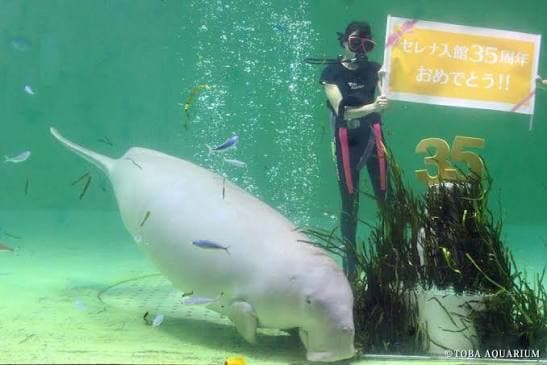
Serena the dugong grazing in the Sea of Mermaids tank at Toba Aquarium.

Day 4 · Thursday, 22 July 2027

Toba Aquarium & the Sea of Mermaids

鳥羽水族館・人魚の海Toba Suizokukan · Ningyo no Umi

Getting here: about 15 minfrom Pearl Island & Aquarium pier

The only dugong in Japan, in a tank named for the legend she is blamed for starting.

The boat sets you down and the doors take you in out of the heat, and the temperature drop is the first good thing that happens. This is one of the largest aquariums in the country and it has no fixed route through it — the map is a suggestion, the arrows point both ways, and you are meant to wander. So go left, to the zone called Ningyo no Umi, the Sea of Mermaids. Behind the glass, moving with the particular unhurried heft of something that has never needed to hurry, is Serena. She is a dugong, she is the only one in Japan, and she came here on 15 April 1987 — which by last spring made thirty-nine years, the longest any dugong has ever been kept anywhere. She grazes seagrass laid out for her by divers. She rolls. She is enormous and she is entirely uninterested in you. Sailors squinting at animals like her, upright at the surface with a calf held to the chest, is where a great deal of mermaid folklore comes from — and this aquarium is quietly making that argument by what it chose to call the room.

The story behind it

The Nun Who Lived Eight Hundred Years

A Japanese ningyo is not the mermaid of European postcards. Old records describe something closer to a monster — a fish body with a human face, a mouth of small teeth, a voice like a skylark — and an omen: to see one was to expect war or calamity. But its flesh conferred impossible life. In the best-known telling a fisherman brings home a strange catch, his guests recognise it and quietly refuse to eat, and his young daughter, knowing nothing, finishes her portion. She stops ageing. She marries, and buries her husband; marries again, and buries him too. Eventually she shaves her head, becomes a nun, and walks Japan for eight hundred years planting camellias, until she asks at last to be allowed to die. They call her Yao Bikuni, the eight-hundred-year nun, and towns from Fukui to Wakasa still show you her cave.

The building is full of the dragon king's household. His messenger is the oarfish, hanging in the deep-sea gallery. His palace is the boat you arrived on. And the mermaid the room is named for turns out, on inspection, to be a large grey herbivore who has been eating seagrass here since 1987.

What people actually do here

Japanese aquariums keep public diaries. Keepers post daily — what an animal ate, what it refused, what it did that was funny — and an animal's arrival date is celebrated the way a birthday is. Serena's is 15 April, and the staff mark it by taking a hand-lettered sign into the tank with her and presenting the seagrass she likes best, underwater, while people watch through the glass. It is not done for the visitors. It is done because thirty-nine years is a long time to look after somebody.

◆The oarfish is called ryūgū-no-tsukai — Messenger of the Dragon Palace. It lives a kilometre down, is sometimes eleven metres long, and washes ashore before earthquakes often enough that Japan has never entirely stopped taking the omen seriously.

Words you will see here

人魚ningyo
"person-fish" — the Japanese merfolk, an omen rather than a beauty
ジュゴンjugon
dugong; the seagrass-grazing sea cow behind the mermaid stories
八百比丘尼Yao Bikuni
the nun who ate ningyo flesh and could not stop living
リュウグウノツカイryūgū-no-tsukai
the oarfish — literally Messenger of the Dragon Palace

05

Day

高知

Friday, 23 July 2027Port of call

Kōchi

The dragon shrine, seen from the dragon's head

The beach day. A crescent of five-coloured shingle that Japan reserves for looking at the moon, strung between Dragon Head Cape and Dragon King Cape, with the sea god's shrine on the rock at the far end. You go down onto the sand before lunch, while it is still under thirty degrees — then you see the shrine from the viewpoint rather than climbing to it, and you reach that up a ramp instead of the stairs. The morning goes to an air-conditioned museum on the castle hill of the warlord who founded the shrine in the first place, and lunch is the long cool sit-down at the end rather than a break in the middle.

Kōchi Shinkō — alongside, Misato No. 7 wharf

Ashore from

09:30

Be back by

15:30

ship's all aboard 16:30

Ship sails

17:00

The latest deadline of the week, and the most slack: the whole shore day runs 09:30 to 14:00 against a call that does not end until 17:00, so there is an hour and a half of margin behind you and no point in the day where you are hurrying. One thing to watch for in the Patter — because the first port after this is Korea, Japanese exit immigration happens before Seogwipo, and Princess's own wording allows it to be run at the previous port's terminal rather than on board. If Kōchi is named as the exit-inspection point, that inspection time becomes your real deadline, not 16:30, and you cannot go ashore again once you have cleared it.

The big number is ours, not the ship’s — ninety minutes before she sails rather than the thirty Princess asks for. Princess sails on schedule and says in writing that she may do it with no announcement; there is no last call. And on a Japan round trip Princess Japan does not accept boarding at a later port, so there is nothing to catch her up from. Both times here are derived from the published sailing time — the binding one is in the Princess app and on the gangway sign that morning.

Warning for this day: Nothing ashore before about 09:30 — she is not alongside until nine and the gangway takes another half hour. After that the day is yours: a museum on the castle hill of the warlord who founded the dragon shrine, then the beach itself, then the ramped viewpoint that holds both capes in one frame, then a long indoor lunch. One taxi, held all day, and aboard again by two — an hour and a half inside our own deadline. The beach comes before lunch on purpose: there is no shade at all on the sand and by half past twelve it is over thirty degrees.

Every move you make today10 legs · 4 h 50 min moving
  1. 09:00

    No travel30 minarrive 09:30

    Kōchi Shinkō to Alongside, gangway rigged

    Berthing, lines ashore and port formalities at Misato No. 7 wharf. Alongside — no tender here.

  2. 09:30

    On foot15 minabout 250 marrive 09:45

    Stateroom to Gangway and across to the taxi

    Corridor and lift to the disembarkation deck, then across the quay apron to the terminal.

    An unshaded working apron. It is the only open-air walking of the day that is not optional.

  3. 09:45

    Taxi12–15 min5 kmarrive 10:00

    Kōchi Shinkō cruise terminal to Sakamoto Ryōma Memorial Museum, Urado Shiroyama

    Pre-booked taxi west over the Urado Bridge. Show the driver 高知県立坂本龍馬記念館(高知市浦戸城山830)and add 記念館の無料駐車場の中まで入ってください — please drive right into the museum's own free car park. Ask him back for 11:20 and take his card.

    There is no bus and no railway anywhere near this terminal, so the car has to be contracted to wait and return. The city centre is about 25 minutes away and is out of range under the new rule — everything worth having is on this headland.

    Check this: Book the car for 09:45, not 09:35. She is not alongside until nine, the gangway takes another half hour, and the walk across the apron is a further fifteen minutes — a car ordered for 09:35 is a car waiting on the meter while you are still on the ship.

  4. 10:00

    No travel1 h 20 minarrive 11:20

    Sakamoto Ryōma Memorial Museum to The sea-view gallery, on the castle hill

    The taxi stops at the building. No step at the entrance, a handrail ramp, four wheelchairs lent free, and air conditioning throughout. Lift from reception to 2F, across the covered walkway into the Main Building, and out into the 海の見える・ぎゃらりい — a seated, step-free gallery looking clean over the Pacific.

    The museum stands on Urado Shiroyama, Chōsokabe Motochika's castle hill — and Motochika is the man credited with founding the dragon-king shrine on the cape below, as the guardian of his castle's unlucky quarter. Ryōma's own name is written 坂本龍馬: dragon horse.

    Check this: Do not try for the roof. The museum's own floor plan marks the way up as a spiral stair from both 2F and the mezzanine, with no lift drawn to it. You lose nothing — the 2F gallery is the sea view.

  5. 11:20

    Taxi3 min660 m

    The museum to Katsurahama Park car park

    The same held car, 660 m down the hill.

  6. 11:30

    Steps25 min there, on the sand, and back200 m each wayarrive 11:55

    Katsurahama Sea Terrace to Down onto the sand

    Down through the shops and the rest house to the beach itself — about 200 metres. The direct path has both slopes and steps; there is a ramped walkway alongside it, so ask for the スロープ and take that.

    This is the beach, and it is worth the time: crouch down and the shingle is not grey but green, red, white, black and grey — five colours, ground off Mount Ishizuchi and sorted by the surf. Japan keeps this crescent for looking at the moon.

    Check this: Do not swim here — the undertow is lethal and it is signposted, which is why the swim is on Jeju instead. This is the first thing you do after the museum, and deliberately so: there is no shade at all once you are on the sand, and by half past twelve it is over thirty degrees. Lunch is the reward afterwards, indoors.

  7. 11:55

    On foot20 min there, at the statue, and back200–250 m each way, made surfacearrive 12:15

    The beach to The Ryōma statue viewpoint — by the ramp, not the steps

    This is the find. Beside the wide staircase up to the viewpoint there is a wheelchair ramp, and Kōchi City's own wheelchair-and-pushchair route map runs this way: 「この階段左には車椅子用のスロープもあり、1段も階段を使う事無く龍馬像前に到着できます」 — a ramp to the left of the steps reaches the front of the Ryōma statue without using a single stair.

    This is where you see the dragon king's shrine from, and it is the whole reason the climb is not on the plan. From up here you get the entire crescent — strung between Ryūzu-misaki, Dragon Head Cape, where you are standing, and Ryūō-misaki, Dragon King Cape, at the far end with its red torii and the vermilion Ryūō-gū on the rock. Dragon's head looking at dragon king, the beach between them. Getting to the shrine itself means the full length of the beach in unshaded sand and then a steep salt-worn stairway with no confirmed handrail, which is not what this trip is for — you have the torii, the hall and both capes from here.

  8. 12:15

    No travel1 h 15 minarrive 13:30

    Katsurahama Sea Terrace to Lunch indoors, and the free museum

    The commercial terrace beside the car park, rebuilt and reopened in 2023. Sit-down lunch out of the sun at Kōchi Bishokukan Jin or Umisachi, then the free Katsurahama Museum — indoor, air-conditioned — and an information desk that lends wheelchairs and has charging and wifi.

    The long cool sit-down at the end of the shore day rather than in the middle of it. Everything outdoors is behind you by now.

  9. 13:30

    Taxi12 min5 kmarrive 13:42

    Katsurahama to Kōchi Shinkō cruise terminal

    The same held car back over the Urado Bridge.

  10. 13:45

    On foot15 minabout 250 marrive about 14:00

    Terminal to Gangway

    Back across the apron and through the single re-boarding screening line.

    Aboard by about two — an hour and a half inside our own deadline of 15:30, two and a half hours inside the ship's, and three hours before she sails. Costed at fifteen minutes rather than ten because the walk out had no queue and this one has a screening line at the end of it.

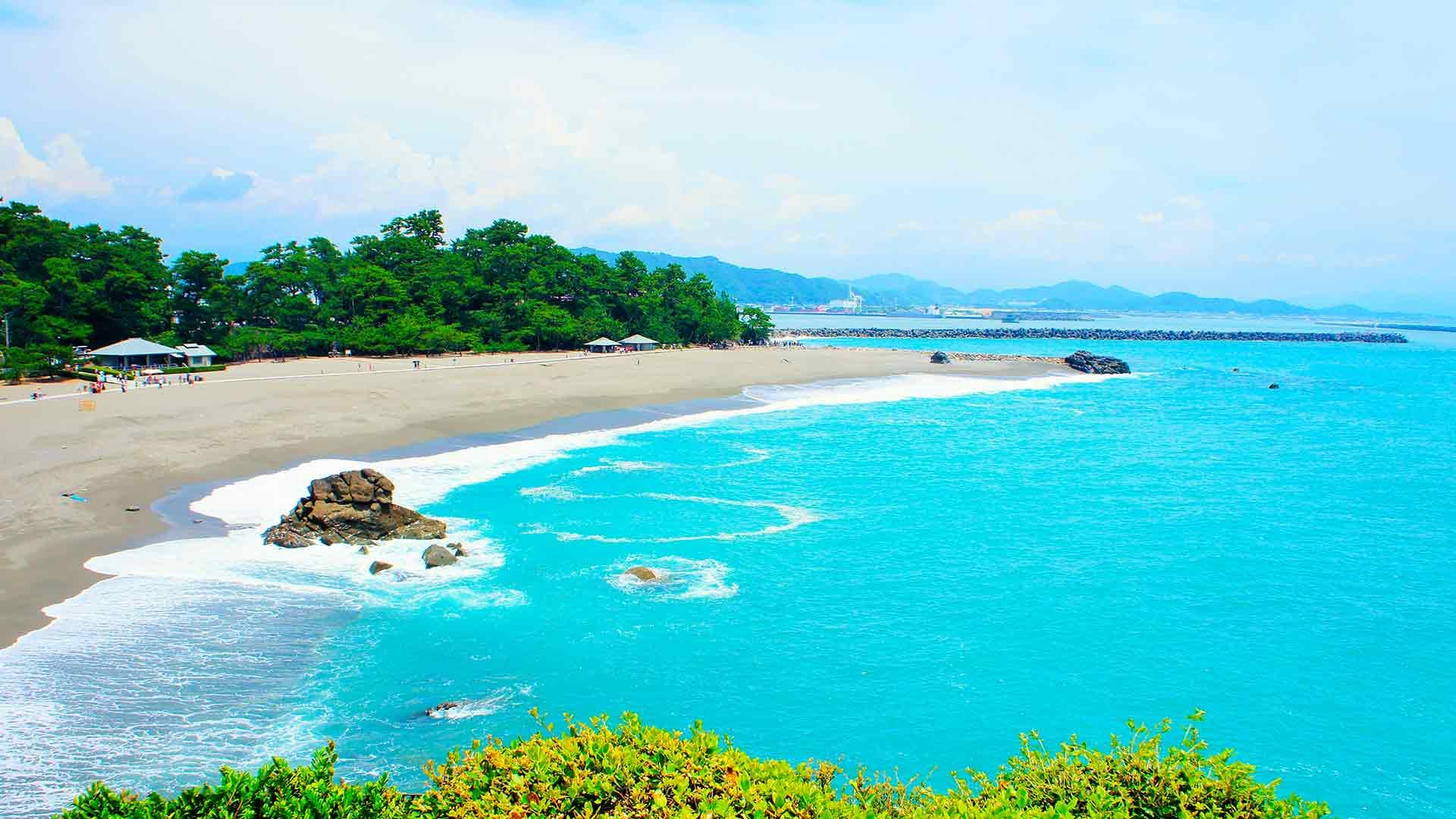
The pine-framed crescent of Katsurahama beach on the Pacific coast of Kochi.

Day 5 · Friday, 23 July 2027

Katsurahama Beach

桂浜Katsurahama

Getting here: about 2 h 48 minfrom Stateroom — on foot, taxi, steps

Google Maps桂浜— show this to the driver

Mid-beach. The crescent is 344 m end to end, so no single pin is right: the car park is 272 m north and the Ryōma statue 166 m north-east and uphill.

A moon-famous crescent of five-coloured pebbles, with Ryoma staring down the Pacific.

You hear it before you see it: the Pacific arriving all at once, no reef, no shelter, straight off the open ocean. Then the pines break and the crescent appears — five hundred metres of sand and stone strung between two headlands, Ryūzu at one end, Ryūō at the other. Dragon's head; dragon king. Crouch and the shingle is not grey but green, red, white, black and grey, rounded by rivers off Mount Ishizuchi and sorted by the surf. Above you Sakamoto Ryōma stands in bronze, 5.3 metres of him on a plinth that lifts him to thirteen and a half, kimono and Western boots, hands folded into his sleeves, facing the ocean he wanted Japan to cross. Do not swim; the undertow here kills people. Come back at dusk instead. This is the moon's beach.

The story behind it

The Tree That Grows on the Moon

The beach was written many ways in old records — Katsuura-hama and others — before the characters settled on 桂, katsura, the tree that East Asian legend says grows on the moon. In the story a man named Wu Gang is sentenced to fell it; every cut he makes heals over instantly, so he chops forever, and the shadow on the moon's face is his tree. Tosa's people took that name for their beach because the moon rising straight out of the Pacific here was reckoned the finest in the province. Kōchi's own folk song still says so: tsuki no meisho wa Katsurahama — "for the moon, the famous place is Katsurahama."

The beach is held between two dragons — Ryūzu-misaki, Dragon's Head Cape, at one end and Ryūō-misaki, Dragon King Cape, at the other, with the sea-god's shrine on the stair above.

What people actually do here

Tsukimi, moon-viewing, is a real observance still. For the autumn harvest moon people gather with dango dumplings stacked in a pyramid and susuki pampas grass set where the light can reach it — an offering of what the season gave. In July you get the summer moon instead, lifting clear of the Pacific. The etiquette is nothing: bring little, say less, watch.

◆Katsurahama's pebbles come in exactly five colours from five different rocks — green tuff, red basalt, white quartz, black shale, grey sandstone.

Words you will see here

桂浜Katsurahama
"Katsura-tree beach" — for the tree said to grow on the moon
月見tsukimi
Moon-viewing; a seasonal ritual of watching the moon rise
五色の小石goshiki no koishi
The beach's celebrated five-coloured pebbles
龍王岬Ryūō-misaki
Dragon King Cape, the headland closing the beach's far end
A small red shrine perched on the cliff above Katsurahama.

Day 5 · Friday, 23 July 2027

Watatsumi Shrine — Katsurahama's Dragon King Palace

海津見神社(桂浜龍王宮)Watatsumi-jinja / Katsurahama Ryūō-gū

Getting here: about 20 minfrom The beach

Google Maps海津見神社 龍王宮— show this to the driver

There is no shrine called Ryūōtsu anywhere at Katsurahama — the brief's name is a garbling. This is the real one, on the headland at the south-west end. No vehicle access; you cross the little Ryūgū bridge and climb.

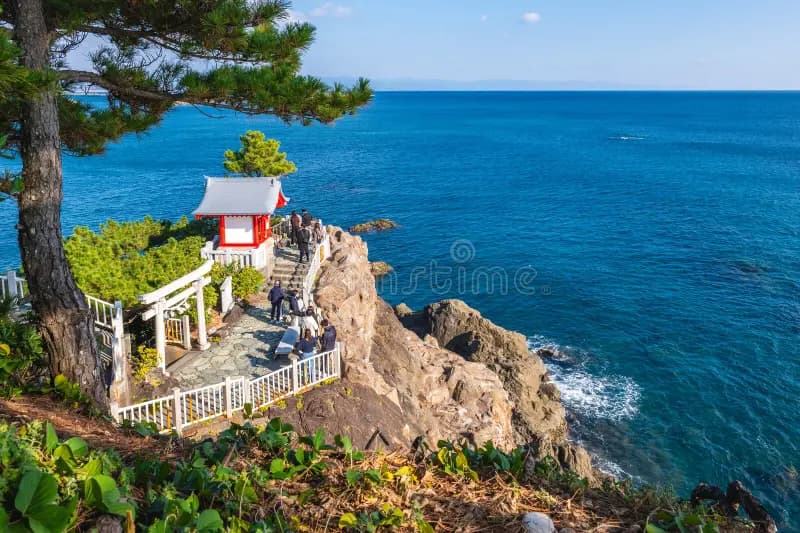
A red torii on the far cape, and a dragon king who rules the tides.

At the far end of the beach a small bridge crosses to Ryūō-misaki, and then the stone steps begin — steep, salt-worn, walled in by wind-cut green, climbing the rock in short flights until the vermillion torii opens onto nothing but sky and water. You are not going up them. From the Ryōma viewpoint at the other end of the crescent, reached by a ramp rather than a stair, you can see the whole thing: the red torii on the rock, the tiny hall beside it, and the surf working the cliff underneath. Dragon's head looking at dragon king, the length of the beach between. Ōwatatsumi-no-kami is enshrined here: safety at sea, full nets, rain when the fields want it, and, they add, good marriages. Fishermen out of Urado have asked here for centuries; tradition credits the Chōsokabe lords with founding it. There is usually no priest. You drop coins in the box, bow into the wind, and the sea answers by hitting the rocks.

The story behind it

The Dragon Who Keeps the Tides

Ōwatatsumi is the sea given a will — born, the Kojiki says, of Izanagi and Izanami, master of every current and every creature in it. Japan long ago folded him together with Ryūjin the dragon, who keeps in his palace the kanju and manju, the tide-ebbing and tide-flowing jewels. The story that matters on this cape is Hoori's: having lost his brother's fishhook, he goes down to the dragon's palace, marries the sea-god's daughter Toyotama-hime, and comes home with both jewels — raising the tide against his brother, then letting it fall. To ask a dragon for the sea's mercy is to ask the one who decides when the water comes.

Cape, shrine and kami are all dragon: Ryūō-misaki, Ryūō-gū, and Ōwatatsumi, whom Japan reads as Ryūjin. The same sea-god you saluted at Futami the day before.

What people actually do here

Drawing an omikuji: rattle the hexagonal box until one numbered stick slides out, hand over the number, take your slip and read it — daikichi, great blessing, down through kyō, curse. Good fortune goes home in your wallet. Bad fortune is folded and tied to the rack or a pine branch, traditionally one-handed, so the luck stays at the shrine and not with you.

◆Its formal name is Watatsumi Shrine; everyone calls it Ryūō-gū, the Dragon Palace. English spellings vary wildly — the cape itself is Ryūō-misaki.

Words you will see here

大綿津見神Ōwatatsumi-no-kami
The great kami of the sea, ruler of all its creatures
龍王宮Ryūō-gū
"Dragon King Palace" — the shrine's popular name
おみくじomikuji
Fortune drawn by lot; bad ones are tied off and left behind
満珠manju
The tide-flowing jewel kept in the dragon's palace

06

Day

関門海峡

Saturday, 24 July 2027Scenic cruising

Kanmon Straits

The narrowest water in Japan, taken slowly

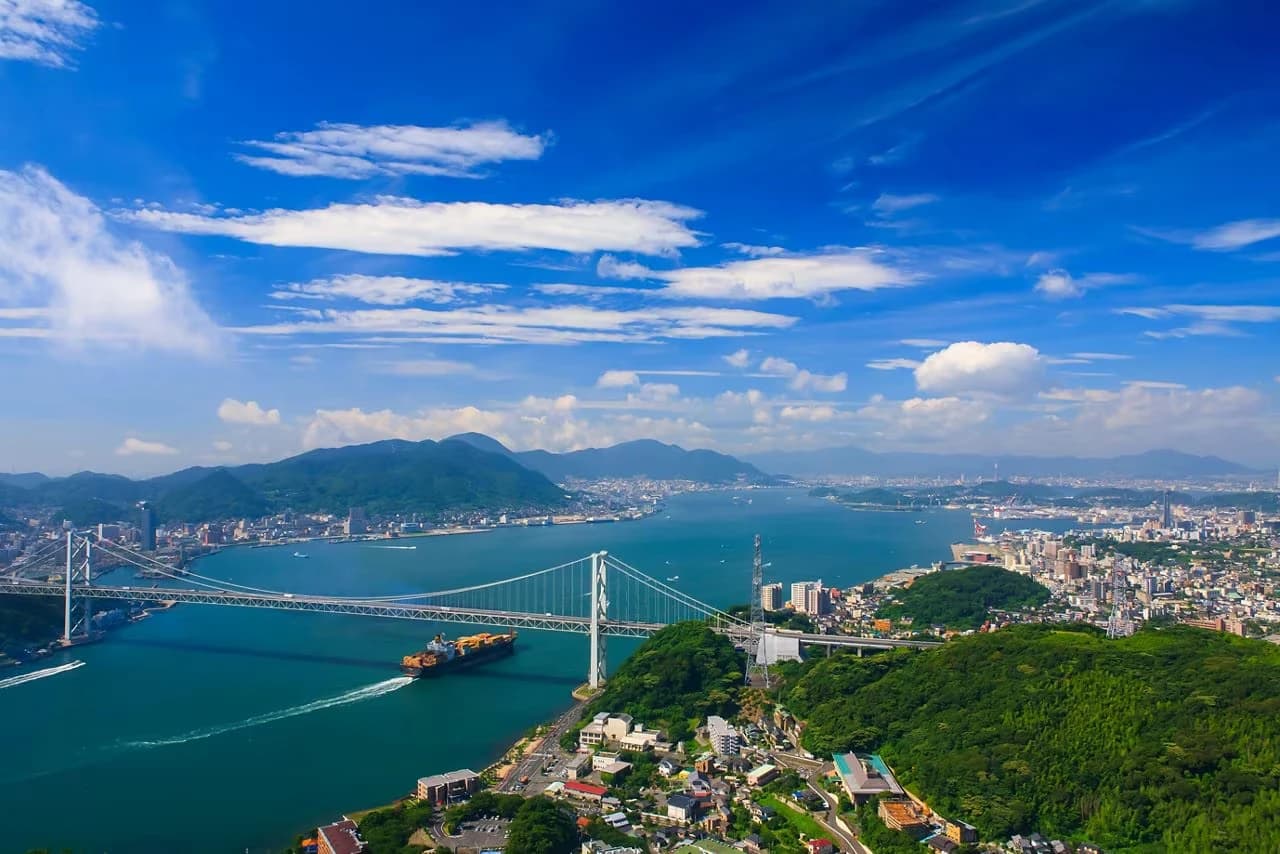
No shore excursion and nothing to be late for. Mostly the balcony — but a fixed balcony only ever sees one bank, so the twenty minutes that matter happen on an open deck, with a bridge passing overhead and Shimonoseki to starboard: the stretch of water where a six-year-old emperor was carried down to a capital beneath the waves.

Warning for this day: No gangway today and nothing to be late for — she never stops. The only time that matters is the transit window itself, and that one is set by the tide rather than by a timetable.

Every move you make today3 legs · 2 h 15 min moving
  1. ·

    On footunder 1 min4 m

    Stateroom to Your own balcony

    The verandah door.

    Westbound through the strait, Shimonoseki and Honshū are to starboard and Moji and Kyūshū to port. Worth knowing which side of the ship you booked.

  2. ·

    On foot5–8 min each way200 m each way

    Stateroom to Forward open deck

    Corridor and lift to Deck 15–16 forward, or the Promenade on Deck 7.

    Check this: The brief promises the whole thing "viewed entirely from the private Balcony Stateroom", and so, until this pass, did the chapter above. It is not true. A fixed balcony sees one bank: booked port side you get Moji and Kyūshū and miss Shimonoseki, Akama Jingū and the Dan-no-ura shore the whole day is built on. Both banks, and the bridge tower passing overhead, mean going up to an open deck for the twenty minutes it matters. Take a hat — there is no shade up there.

  3. ·

    Passenger boatabout 10 min

    Pilot boarding ground, east approach to The ship's bridge

    Kanmon Kaikyō pilot cutter, coming alongside while the ship slows without stopping.

    Pilotage is compulsory in this channel at 10,000 gross tons and over. She is 115,875. Costed at nothing because it is the pilot's journey, not yours — it is here so you know what the small boat coming alongside is.

  4. 09:00

    Aboard ship2 h scheduled block, about 1 h 15 min of it in the channel28 km — 15 nautical milesarrive 11:00

    East entrance, off Tanoura to West entrance, off Mutsure-jima

    Under pilotage and Kanmon MARTIS traffic control, through a channel that carries up to a thousand vessels a day.

    Check this: The 09:00–11:00 window comes from cruise-retailer listings for this sailing, not from Princess. The hour is locked to the tide and differs on every sailing — other Diamond Princess dates show an 11:00–13:00 block. Take the Patter as the authority and set no alarm by this page.

  5. ·

    Aboard shipabout 5 min2 km

    Dan-no-ura to Mekari, under the Kanmon Bridge

    The narrows — Hayatomo no Seto.

    About 650 metres shore to shore. The bridge keeps 61 metres of clearance against roughly 54 of air draft. The current runs to ten knots and turns about every six hours. These five minutes sit inside the two-hour block above rather than after it — this is the moment to be on deck for, not a separate leg.

  6. ·

    Passenger boatabout 10 min

    The ship's bridge to Pilot cutter, west of the strait

    The pilot goes off the same way he came on.

    Again the pilot's journey rather than yours. This is the real end of the scenic window — after it she works up for the overnight run to Jeju.

The Kanmon Bridge seen from the water, spanning the strait between Honshu and Kyushu.

Day 6 · Saturday, 24 July 2027

The Kanmon Straits

関門海峡Kanmon Kaikyō

Getting here: about 1 minfrom Stateroom

Google Maps関門橋(下関・門司)— show this to the driver

Mid-span of the Kanmon Bridge — a place to look at from the balcony rather than go to. A bare search for 関門橋 can also return an unrelated bridge in Tochigi.

The narrowest gap in Japan's history, where a child emperor sank to the dragon king.

You never have to leave the balcony. Coffee, a chair, and Honshū closing on one side while Kyūshū closes on the other until the gap is barely six hundred and fifty metres and the ship is threading it. The water is not flat: it seams and boils and drags in ropes of current that can run past ten knots and reverse four times a day. Shimonoseki slides by — watch the shore for a red-and-white gate, Akama Jingū, built deliberately in the shape of the dragon palace. Then the Kanmon Bridge fills the sky, sixty-one metres of clearance, and for a few seconds the entire span passes overhead. Off to one side, low and green, Ganryūjima, where Musashi killed Kojirō with a carved oar in 1612. And below you, somewhere: 1185.

The story behind it

A Capital Beneath the Waves

Here on 25 April 1185 the Genpei War ended. Minamoto no Yoshitsune's archers shot the Taira helmsmen and rowers; the tide, by the traditional account, turned against the Taira through the afternoon. With defeat certain, Taira no Tokiko — Nii-no-Ama, the Nun of the Second Rank — gathered her grandson, the six-year-old Emperor Antoku, with the sacred sword at her waist and the sacred jewel under her arm. She turned him east to bid farewell to Ise, then west toward the Pure Land, and told him: nami no shita ni mo miyako no sōrō zo — beneath the waves, too, there is a capital. Then she carried him in. The mirror and jewel were recovered. The sword was not.

The voyage's keystone. Antoku vanishes into Ryūgū-jō, and medieval texts claim he was the Dragon King's daughter reborn — or the serpent Orochi — come to take back the sword Kusanagi.

What people actually do here

On the Kyūshū shore stands Mekari Jinja, whose priests still perform Mekari Shinji. In the small hours of the lunar New Year, by torchlight, three of them wade into the freezing strait and cut wakame seaweed stalk by stalk to lay on the altar — the sea's first harvest of the year, offered straight back to the sea. Fukuoka lists it as intangible folk culture.

◆Heikegani crabs wear a scowling samurai face on their shells — the drowned Heike, locals say. Sagan blamed fishermen's selection; the crabs are too small to eat.

Words you will see here

龍宮城Ryūgū-jō
The dragon king's palace beneath the sea, where Antoku is said to have gone
平家蟹heikegani
"Heike crab" — its shell ridges read as a drowned samurai's face
壇ノ浦Dan-no-ura
The strait's eastern shore; site of the 1185 sea battle
関門海峡Kanmon Kaikyō
Strait named from Shimonoseki (kan) and Moji (mon)

07

Day

서귀포 · 제주

Sunday, 25 July 2027Port of call

Seogwipo, Jeju

Korea for a day, taken gently

The one foreign port, and the one with a kilometre of corridor at each end of it — so the day is deliberately short and in the right order. First the gorge at nine, while it is cool: an arched bridge over the falls with seven heavenly women carved along its flank, coming down to bathe. Then the swim, eighty minutes of it, on black and red and white volcanic sand. Then a long lunch, and back aboard by two with two hours still in hand. Two stops, never three — a third is what used to push this day past its own deadline.

Seogwipo Gangjeong, Jeju — alongside

Ashore from

07:00

Be back by

14:30

ship's all aboard 15:30

Ship sails

16:00

An immigration day, so plan it as one continuous trip ashore: where entry formalities are run, Princess suspends the usual right to come back for lunch and go out again. This is also the only day in a foreign country, which means exit formalities and a security screen on the way back in, and taxis that rank outside the port gate rather than at the terminal door. The return is costed at fifty-five minutes rather than forty-five for exactly that reason, and it still puts you aboard at two — half an hour inside our own deadline and an hour and a half inside the ship's. Two stops only, and that is the whole trick of this day: a third one is what used to land it five minutes past our own deadline. Note that the shore-hours figure for this call comes from cruise-retailer databases rather than from Princess directly; reconfirm it in the app.

The big number is ours, not the ship’s — ninety minutes before she sails rather than the thirty Princess asks for. Princess sails on schedule and says in writing that she may do it with no announcement; there is no last call. And on a Japan round trip Princess Japan does not accept boarding at a later port, so there is nothing to catch her up from. Both times here are derived from the published sailing time — the binding one is in the Princess app and on the gangway sign that morning.

Warning for this day: The swim day, and the one foreign port. Two hard facts shape it: the walk from the ship to Korean immigration is about 1,200 metres of corridor and you do it both ways, and the Jungmun sand has no road to it — 250 to 700 metres of ramp and 30 to 50 vertical metres down. So the day holds two stops and no more. The falls come first, at nine, while it is still cool and while the beach is shut anyway — Jungmun has no lifeguards before ten. Then eighty minutes in the sea, then a long lunch out of the sun, then home with two hours to spare before she sails. Yeomiji's glasshouse was the alternative first stop and it is the safer one on paper — documented step-free, a lift, free wheelchairs — but it costs the swim twenty minutes and it is not what the waterfall is on this itinerary for. No car is held today: Jungmun is a resort, cars circulate, and the whole day's driving comes to about ₩40,000.

Every move you make today10 legs · 5 h 51 min moving
  1. 07:45

    On foot1 habout 1.2 km each wayarrive 08:45

    Stateroom to Out through the port gate

    Gangway, then roughly 1,200 metres of covered corridor on a moving walkway to the terminal, then Korean immigration — quarantine, passport, customs, agricultural quarantine — and out to the gate.

    Korea is a separate entry: fingerprints and a facial scan, at a staffed counter. Gangjeong's automated gates will not help — Canada is not on the eligible list. Taxis rank outside the gate beside the Jeju Global Taxi desk, and Kakao T takes international cards. Going at a quarter to eight rather than at nine is what buys the whole day its margin: it is the only slack this port has, and it sits at the front.

    Check this: This is the fact that reshapes the whole day, and no brief mentions it: the walk from the ship to immigration is about 1,200 metres, the walkway runs intermittently to manage crowding at the exits, and you do it twice. That is roughly 2.4 km of corridor before a single metre of sightseeing. Do not decline any shuttle, paid or free. Sit down at the gate before you do anything else — and if immigration has run long or it is raining, tell the driver 서귀포매일올레시장 instead: a 620-metre covered arcade eighteen minutes away, step-free, with three accessible toilets and somewhere to sit down, which you can leave whenever you like.

  2. 08:50

    Taxi18 min10.6 kmarrive 09:08

    Gangjeong cruise port gate to Cheonjeyeon Falls, west gate

    Kakao T or k.ride from the rank outside the gate. Show the driver 천제연폭포 — and ask for the west ticket booth on the Jungmun resort side, the one nearest Yeomiji, not the main east entrance.

    Roughly ₩15,000–20,000. No need to hold this car — Jungmun is a resort with hotels on every corner and cars circulating all day, so you hail the next one when you are ready.

  3. 09:10

    No travel40 minarrive 09:50

    Cheonjeyeon Falls to Seonimgyo, and the seven who come down at midnight

    ₩2,500 each. Cross the arch over the gorge and look down on the second falls — thirty metres of white water into a ravine ten degrees cooler than the road. Along the bridge's flank, carved in stone, seven heavenly women fly in trailing ribbons with instruments in their hands.

    The bridge is the whole prize and it is at the top, so this is a there-and-back rather than the full circuit. Nine in the morning is the coolest hour you will get ashore, and the beach has no lifeguards until ten anyway — so this slot was otherwise going to be spent waiting.

    Check this: Ask at the west booth before you buy whether Seonimgyo itself is step-free, and take a straight answer for an answer: the surveyed accessibility record for this gorge could not be confirmed, and most of what is published online actually describes Cheonjiyeon, a different waterfall 12.7 km away whose name differs by one syllable. If they hesitate, the falls are visible from the rim and the full circuit — about 1.5 km and roughly 300 steps — is not the plan in any case. The first fall only runs after heavy rain; the second flows year round.

  4. 09:55

    Taxi6 min1.8 kmarrive 10:01

    Cheonjeyeon Falls to Jungmun Saekdal Beach car park

    A couple of minutes down the hill inside the same resort complex. Give the driver 중문색달해수욕장 주차장.

    About ₩5,000. Hail it at the falls car park or on the app — you are inside a resort, not out in the country.

  5. 10:05

    On foot12 min down250–700 m, dropping 30–50 marrive 10:17

    The car park to Down to the sand

    A ramp rather than steps, at about one in twelve — 250 to 700 metres depending which car park the driver stops at, dropping 30 to 50 metres to the water. If he will take you down to the lowest lot at 33.24519, 126.40504 you halve the climb back.

    Free to enter. Changing rooms and toilets on site; showers are ₩2,000 and cold only, so bring a towel and something dry to put on. No lockers are confirmed anywhere — leave anything you would mind losing on the ship. Parasols ₩20,000 if you want shade.

  6. 10:20

    No travel1 h 20 minarrive 11:40

    Jungmun Saekdal Beach to The swim, and the sound the divers make

    Black, grey, red and white volcanic sand under basalt cliffs, a sea cave fifteen metres tall at the east end, and haenyeo working the water offshore. Eighty minutes in and out of the water, which is what the whole day was built for — and twenty more than the garden version of this day allowed.

    Check this: Three things that matter here. The beach only operates 10:00–19:00 and there are no lifeguards outside that, which is why nothing on this day tries to get you here earlier. It is split in half during the season — a swimming zone and a surfing zone — and you stay in the swimming half. And Jungmun is one of about ten Korean beaches with real-time rip-current monitoring: the rips are strong, entry is banned outright in the marked zone near the entrance, and the standing advice is to stay where you can touch the bottom. Jeju also raised its jellyfish alert in 2026 and someone was stung here that summer — check the boards and ask the lifeguards on the day.

  7. 11:40

    On foot15 min up250–700 m, climbing 30–50 marrive 11:55

    The sand to Back up to the car park

    The same ramp, the other way, in the middle of the day.

    Longer coming up than going down, and it has its own row because it is the single hardest fifteen minutes of the day — 50 vertical metres, wet, in thirty degrees. Take it slowly; nothing is waiting on you.

  8. 12:00

    No travel50 minarrive 12:50

    A Jungmun beach cafe to Lunch, out of the sun, for as long as you like

    Three to five minutes from the car park, step-free, seated, air-conditioned, sea views.

    Everything demanding is now behind you. This is where the day's spare half hour lives if you want to spend it.

  9. 12:50

    Taxi15 min10.8 kmarrive 13:05

    Jungmun to Gangjeong cruise port gate

    Kakao T or k.ride from the resort — cars circulate here all day.

    About ₩15,000–20,000 again, so roughly ₩40,000 for the whole day's driving.

    Check this: Do not gamble the return on the free shuttle. Order the car before you leave the cafe, not at the kerb.

  10. 13:05

    On foot55 minabout 1.2 kmarrive about 14:00

    Port gate to Stateroom

    Korean exit formalities, security screening, then the 1,200-metre corridor again.

    Costed at fifty-five minutes, not the forty-five an earlier version allowed — this is the same corridor as the morning plus exit formalities and a security screen, and it is the last thing standing between you and the ship. Aboard about two: half an hour inside our own deadline, an hour and a half inside the ship's, and two hours before she sails.

Cheonjeyeon waterfall dropping into its turquoise pool through dense green forest.

Day 7 · Sunday, 25 July 2027

Cheonjeyeon Waterfall

천제연폭포 (天帝淵瀑布)Cheonjeyeon Pokpo

Getting here: about 1 h 18 minfrom Stateroom — on foot, taxi

Google MapsNaver Map천제연폭포— show this to the driver

Google can show you this pin but cannot give you directions to it — nothing routes inside South Korea. Use Naver.

Not Cheonjiyeon (천지연폭포), which is a different waterfall 12.7 km east in Seogwipo city. One syllable apart, and a driver given the wrong one takes you across the island.

Three falls, a pond twenty-one metres deep, and seven nymphs who come down at midnight.

Below you the path drops into a gorge so green the light turns underwater — warm-temperate forest, ferns wedged into rock seams, vines, birds you cannot name, and air ten degrees cooler than the road. The first fall comes off a cliff twenty-two metres up into a pond that goes down twenty-one more, jade at the rim and black in the middle. Downstream a second throws thirty metres of white water into the ravine, and a third runs out to the sea. You are staying at the top. Over the gorge arches Seonimgyo, and along its flank, carved in stone, seven women fly in trailing ribbons with instruments in their hands — and the bridge is the thing worth coming for. Ask at the western gate, the one on the Yeomiji side, whether you can reach it without steps. If they say yes, cross it, look down at the second fall, and come back. If they hesitate at all, don't.

The story behind it

The Seven Nymphs and the Pond of the Emperor of Heaven

Cheonjeyeon means the Pond of the Emperor of Heaven, and the legend claims that is exactly what it is. When the world is asleep and no human eye is on the water, seven seonnyeo — heavenly maidens in the service of the Emperor of Heaven — descend a bridge of cloud into the gorge. They bathe in the pool beneath the upper fall, play among the rocks, and climb back into the sky before dawn. A separate island belief holds that anyone who stands under the falling water on the fifteenth day of the seventh lunar month will be healed of illness by the eighth. Swimming is forbidden now. The seven are carved on the bridge instead.

In Korean folk cosmology the Emperor of Heaven commands the dragon kings of the four seas, who carry the rain. This pond bears his name — and its water falls three times down to the Dragon King's door.

What people actually do here

The nymphs are still honoured here: the Jungmun Chilseonyeo Festival, run by the village association, is staged each autumn in Cheonjeyeon Park beside the falls — recent editions have fallen in late September or early October — with a rite to the seven maidens, a re-enactment of their descent, and dancers in flowing seonnyeo robes. On ordinary days the etiquette is quieter. The gorge is a protected natural monument, so you keep to the boardwalk, take nothing away, and leave the pool alone.

◆The gorge became Natural Monument No. 378 in 1993. Its rock crevices shelter skeleton fork fern, a plant whose lineage predates flowers entirely.

Words you will see here

선녀 (仙女)seonnyeo
heavenly maiden or nymph, a stock figure of Korean myth
천제연 (天帝淵)Cheonjeyeon
"Pond of the Emperor of Heaven" — the deep pool below the first fall
선임교 (仙臨橋)Seonimgyo
the arched bridge over the gorge, carved with all seven nymphs
용왕 (龍王)Yongwang
the Dragon King, who rules the sea and delivers the rain
The volcanic multi-coloured sand and basalt cliffs of Jungmun Saekdal beach.

Day 7 · Sunday, 25 July 2027

Jungmun Saekdal Beach

중문색달해수욕장Jungmun Saekdal Haesuyokjang

Getting here: about 18 minfrom Cheonjeyeon Falls — taxi, on foot

Google MapsNaver Map중문색달해변— show this to the driver

Google can show you this pin but cannot give you directions to it — nothing routes inside South Korea. Use Naver.

The sand itself. The car park where the taxi stops is 265 m north and 35 vertical metres up — a walk down, not a scramble. A coordinate circulating in Korean tourism listings puts this 500 m west at the clifftop; ignore it.

Four colours of volcanic sand and grandmothers who surface whistling from the deep.

You come down through the pines and the sand stops being one colour. Black, grey, red, white — jinmosal, Jeju calls it, ground out of the island's own lava and sorted into ribbons by the surf. Behind you a basalt headland rises in rusted columns; to the right the cliff opens into a sea cave fifteen metres tall, and inside it the rock folds like a lacquered screen. The water here is loud. Surfers wait beyond the break for the swell that makes Jungmun famous. Then you notice orange floats offshore, bobbing where no swimmer should be, and a sound carries across the water — a thin, ascending whistle. That is sumbisori, a haenyeo emptying her lungs after a minute under. She is seventy. She dives again. You stand in four colours of ash and understand you are on a volcano that never fully cooled.

The story behind it

The Dragon Who Stole the Jade of Hallasan

On Jeju's north shore, ten metres of black lava stands out of the surf with its head thrown back and its mouth open at the sky: Yongduam, Dragon Head Rock. The stories disagree, which is how you know they are old. In one, a dragon serving the Dragon King climbed Hallasan to fetch the elixir of eternal life and was shot down by the mountain's guardian spirit. In another it stole the guardian's sacred jade and the arrow found it anyway. Its body sank into the sea; its head froze mid-roar, still straining upward, and there it remains. A third telling makes it a white horse that dreamed of becoming a dragon and was caught in the act of ascending.

Jeju's sea belongs to Yongwang, the Dragon King; divers petition him before the season. On the north coast his fallen messenger is still visible — Yongduam, a dragon's head turned to stone.

What people actually do here

Haenyeo still work in cooperatives, ranked hagun, junggun and sanggun by skill, with the sanggun setting the day's boundaries and calling everyone back in. They dive on breath alone, no tank, resting between descents on a tewak float. Before the season they hold shamanic rites asking Yongwang, the Dragon King, and the wind grandmother Yeongdeung for calm water and a full net.

◆UNESCO inscribed the culture of the Jeju haenyeo in 2016. Some are in their eighties, working up to seven hours a day, one held breath at a time.

Words you will see here

해녀 (海女)haenyeo
"sea women" — Jeju's breath-hold divers, many of them grandmothers
숨비소리sumbisori
the whistling exhalation a diver makes the instant she surfaces
진모살jinmosal
Jeju's word for the beach's four-coloured volcanic sand
용두암 (龍頭岩)Yongduam
Dragon Head Rock, on Jeju's north coast at Jeju City

08

Day

長崎

Monday, 26 July 2027Port of call

Nagasaki

You stand at the Dragon Palace Gate

A Ming-style Chinese gate built to look like the entrance to the dragon king's undersea palace — seen from the forecourt, because everything behind it is stairs, and the two National Treasures up there stay a bonus rather than a promise. Then a free public lift carries you up the hill to Glover Garden, and the descent ends indoors with the two Kunchi dragons themselves. Third is Chinatown's Azure Dragon gate, at pavement level. Three dragons before lunch, nothing climbed, and aboard again by half past one.

Nagasaki Matsugae — alongside

Ashore from

07:45

Be back by

14:30

ship's all aboard 15:30

Ship sails

16:00

Your Japanese landing permission was spent when the ship left for Korea, so the whole ship is re-admitted to Japan here, face to face, with a fresh seal, fingerprints and photo. Carry your actual passport — a photocopy will not do, and Japanese law requires you to have the real one on you ashore. Like Seogwipo, this is an immigration day, so treat it as one trip ashore rather than two.

The big number is ours, not the ship’s — ninety minutes before she sails rather than the thirty Princess asks for. Princess sails on schedule and says in writing that she may do it with no announcement; there is no last call. And on a Japan round trip Princess Japan does not accept boarding at a later port, so there is nothing to catch her up from. Both times here are derived from the published sailing time — the binding one is in the Princess app and on the gangway sign that morning.

Warning for this day: Three dragons before lunch, and no climbing required for any of them. The Dragon Palace Gate, seen whole from the forecourt — the two National Treasures behind it are up forty or fifty worn stone steps with no confirmed handrail, so treat those as a bonus rather than the plan. Then the Kunchi dragon-dance pair, which live indoors at Glover Garden through the summer rather than at Suwa Shrine. Then Chinatown's Seiryū gate at pavement level. Glover Garden's hill is handled by a free public lift the brief has never heard of — and there is one trap it also misses: Gate 1 has no taxi access, so the way out is 200–300 metres downhill on cobbles to a road a car can use.

Every move you make today14 legs · 5 h 42 min moving
  1. 07:00

    On foot12–18 minabout 400 marrive 07:15

    Stateroom to Terminal hall, Matsugae

    Corridor, lift down seven decks, gangway onto the apron, then into the terminal.

    Check this: A Diamond Princess call empties well over two thousand people onto one pier road between 07:45 and 09:00. Have the shore excursions desk book a car for 08:10, and sit in the terminal's air conditioning rather than stand in the queue outside.

  2. 07:15

    No travel30 minarrive 07:45

    Terminal hall to Cleared back into Japan

    Immigration and customs face to face in the terminal, because the previous port was foreign: a fresh landing seal, fingerprints and a photo, taken group by group.

    The whole ship is cleared individually, so nobody is out on the street at 07:00 whatever the gangway sign says. Worth knowing and never advertised: the municipal car-park building beside the terminal lends wheelchairs and pushchairs free, and has a wheelchair-rated lift and an accessible toilet. If either of you would rather be pushed today than walk, collect one before you get in a taxi.

  3. 08:10

    Taxi10–15 min2.6 kmarrive 08:25

    Matsugae terminal to Sōfuku-ji, the Ryūgū-mon

    City taxi, 2.6 km. Show the driver: 崇福寺、鍛冶屋町7-5。三門前の右手の拝観者用無料駐車場までお願いします。少し待っていてください — into the free visitor car park to the right of the gate, and please wait.

    Allow the upper end: this route crosses the tram tracks twice and threads the Shianbashi one-way system. Kajiya-machi is a residential temple street with no rank, so have him wait on the meter.

  4. 08:25

    On foot45 min120 m, about 15 m of risearrive 09:10

    The car park to The Ryūgū-mon, from outside

    ¥300 each at the window by the car park. Up the flight to the Ryūgū-mon itself, then the long stone stair behind it — commonly given as forty to fifty steps — to the Daiippō-mon and the Daiyūhōden.

    Forty-five minutes, and the car waits through all of it. Those two upper halls are National Treasures: the Daiippō-mon was cut and fitted in China in the 1690s, shipped over in pieces by junk and raised here in 1696, and its underside is a honeycomb of brackets in vermilion and gold. The Daiyūhōden dates from 1646. Mazu keeps her own hall off to one side — the same sea goddess you met in Yokohama on embarkation morning.

    Check this: There is no way past the gate except the stairs — commonly given as forty to fifty of them — and no handrail is confirmed. Worn stone, and 31 °C by mid-morning, which is exactly why this is the 08:25 stop rather than the noon one. Decide at the bottom, not halfway up: the Ryūgū-mon itself is fully visible from the forecourt, and if you stop there the forty-five minutes is a comfortable look at the gate rather than a climb against a clock.

  5. 09:15

    Taxi8–11 minabout 2 kmarrive 09:25

    Sōfuku-ji to Glover Sky Road lower entrance, Ishibashi

    City taxi to the foot of the free public lift. Not to Gate 2 by road, which is twice as long over a winding hill.

    Check this: The earlier version of this day sent the car away at 08:50, which is twenty minutes before a forty-five-minute visit beginning at 08:25 can possibly end. Tell the driver 09:15.

  6. 09:25

    Escalator5 min62 m of rise, taken entirely by machinearrive 09:30

    Ishibashi to Glover Garden, Gate 2

    The Glover Sky Road — an inclined lift up the hillside then a vertical one, both free, both wheelchair-rated, 06:00 to 23:30. It is a public road that happens to be an elevator.

    2階出口を進むとグラバー園第2ゲート入口は目の前です — step out of the upper exit and Gate 2 is directly in front of you. This is the thing that makes a hillside garden step-free, and no brief mentions it. ¥1,300 each; the discounted rate needs a Japanese disability certificate and will not take a foreign one.

  7. 09:30

    On foot15 minabout 50 marrive 09:45

    Gate 2, the top of the garden to The harbour terrace

    About fifty level metres to the viewpoint by the former Mitsubishi No. 2 Dock House, with your own ship directly below.

    DECISION POINT, and make it here rather than earlier: if legs or heat are bad today, stop. Turn round, ride the lifts back down, and take a taxi from Ishibashi straight to Chinatown — the row below is the one to skip, and skipping it costs you nothing but the Kunchi pair. That is a complete visit for fifteen minutes of flat walking, and it includes the best view in Nagasaki.

  8. 09:45

    On foot1 h 15 min500–700 m, dropping 34 marrive 11:00

    The top of the garden to Gate 1, by way of the Kunchi dragons

    Only if today is good. Take one of the free electric wheelchairs — they are lent at every gate precisely for these cobbles — and go down through the Ringer, Alt and Glover houses to the exit.

    It finishes indoors, air-conditioned and step-free, in the 長崎伝統芸能館 — which holds the 白龍 and the 青龍, the actual Kunchi dragon-dance dragons, included in your ticket. In July they live here rather than at Suwa Shrine, which is the reason not to drive across the city looking for them. Kept as a counted leg rather than an option because the whole day has an hour of margin behind it and because the dragons are the reason to be here — but the decision point above is real, and turning back is a complete day too.

    Check this: Downhill is not easy. Glover Garden's own words: 歩道の殆どが石畳で勾配も随所にあるため — mostly cobbles, on a gradient throughout, with assistance needed even descending. One of you steers the chair, one walks alongside.

  9. 11:00

    On foot8 min200–300 marrive 11:08

    Gate 1 to Ōura Tenshudō-shita, where taxis actually run

    Downhill on Glover-dōri, a cobbled shopping street with awning shade.

    Check this: Nobody tells you this and it is the day's real trap: Gate 1 is not a taxi rank. The city confirms set-down at Gate 2 only, the garden has no car park, and you come out at the top of a pedestrian slope. Book a car to meet you at Ōura Tenshudō-shita for 11:15, or have a shop call one. And decline Ōura Church on the way past — the city is blunt that there is no way in other than a long staircase.

  10. 11:15

    Taxi8 minarrive 11:23

    Ōura Tenshudō-shita to Shinchi Chinatown

    Six to eight minutes onto dead-flat reclaimed land.

  11. 11:25

    No travel15 minarrive 11:40

    Shinchi Chinatown to Under the Seiryū-mon

    Standing under the Azure Dragon gate on the east side — pavement level, no steps, no ticket. Your third dragon of the morning, after the palace gate and the Kunchi pair.

    Given its own row because the old plan promised ten minutes here inside a seven-minute gap. Fifteen is enough to stand under it, photograph it and cross the road.

  12. 11:40

    No travel1 h 15 minarrive 12:55

    Keikaen, Shinchi-machi to Lunch, indoors, through the worst of the heat

    京華園 — the one Chinatown restaurant Nagasaki City's own barrier-free survey certifies: ramp, wheelchair-rated lift, barrier-free toilet, flat access, automatic doors. Lunch to 15:00, last entry 14:30.

    The shorter version of the whole day, if the morning went badly: skip Chinatown entirely and have champon at Shikairō, 200 flat metres from the gangway, where it was invented. Two lifts to the dining rooms. You will still have had the Dragon Palace Gate and the Kunchi dragons and climbed nothing.

  13. 13:00

    Taxi8 minarrive 13:08

    Chinatown to Matsugae terminal

    Five to eight minutes back along the waterfront.

  14. 13:08

    On foot12–18 minabout 400 marrive about 13:26

    Matsugae terminal to Stateroom

    Terminal security and Medallion re-boarding, gangway, lift up seven decks.

    Aboard by about half past one — an hour clear of our own deadline, two hours clear of the ship's, and two and a half hours before she sails.

The Ryugu-mon, the red-and-white Chinese-style Dragon Palace Gate at Sofuku-ji.

Day 8 · Monday, 26 July 2027

Sofuku-ji and the Dragon Palace Gate

崇福寺・龍宮門Sōfuku-ji Ryūgūmon

Getting here: about 1 h 45 minfrom Stateroom — on foot, taxi, on foot

Google Maps崇福寺 三門(龍宮門)— show this to the driver

The gate itself. A generic 崇福寺 search lands 60 m east, inside the grounds and past the thing you came for — and there are other temples of the same name elsewhere in Japan, so say 長崎の崇福寺.

A red gate built to look like the door of the Dragon King's palace under the sea.

You climb a narrow street above Nagasaki's old Chinese quarter and it surfaces in front of you: a two-storey gate lacquered a red that has no business in a Japanese temple, roof corners flung upward, its whole face saying somewhere else. This is the Ryugumon, the Dragon Palace Gate, built to resemble the entrance of Ryugu-jo, the Dragon King's hall on the seabed. What stands here dates from 1849, after fire and typhoon took the earlier gates; it is an Important Cultural Property. Climb the steep stair behind it to the Daiippomon — a gate has stood here since 1644, but the one in front of you was cut and fitted in China in the 1690s, carried over in pieces by junk and raised in 1696, its underside a honeycomb of brackets in vermilion and gold. Past that stands the Daiyuhoden of 1646. Those two are the National Treasures. Off to one side Mazu keeps her own hall: the Chinese sea goddess who looked after the crews who paid for all this.

The story behind it

The Palace Under the Sea

Ryugu-jo is the palace of the Dragon King on the ocean floor, built of coral and crystal, where each of the four sides looks out on a different season. The fisherman Urashima Taro rescues a turtle and is carried down there; he stays what feels like three days, feasting with the Dragon King's daughter, and comes home to find three hundred years gone and every face he knew long dead. The merchants of Fuzhou who founded this temple in 1629 knew a related sovereign, Longwang, the Chinese dragon king of the waters they crossed for a living. So they built his gate at the foot of their temple. You walk in through the ocean floor to reach the Buddha.

The whole temple is entered through the Dragon King's front door. And Nagasaki still dances its Chinese dragon — the ja-odori, chasing a jewel through the streets each October at Kunchi.

What people actually do here

Buy a coil or a bundle of incense at the hall, light it from the flame, then wave it out rather than blowing — your breath is considered impure. Plant the sticks upright in the ash, press your palms together, bow once. At Obaku temples like this one, the sutras are still chanted using Ming-era Chinese pronunciation rather than Japanese readings.

◆In the famine of 1681–82 the priest Sengai had a cauldron cast here large enough to cook gruel for thousands a day. It still sits on the grounds.

Words you will see here

龍宮門Ryūgūmon
Dragon Palace Gate — the temple's red two-storey entrance
龍宮城Ryūgū-jō
the undersea palace of the Dragon King, seat of Ryūjin
黄檗Ōbaku
the Chinese-founded third school of Japanese Zen, based at Manpuku-ji
超然Chōnen
the Fuzhou monk invited to found the temple in 1629 (Ch. Chaoran)
The view over Nagasaki harbour from the terraces of Glover Garden.

Day 8 · Monday, 26 July 2027

Glover Garden & Dejima

グラバー園・出島Gurabā-en, Dejima

Getting here: about 15 minfrom Sōfuku-ji — taxi, escalator

Google Mapsグラバー園 第2ゲート— show this to the driver

Gate 2, the upper entrance at the top of the free Glover Sky Road lift — the one Nagasaki recommends for anyone who would rather not climb. Gate 1 is 215 m away at the bottom of the hill.

Japan's oldest Western house, on a hill above the harbour that built your ship.

Moving walkways carry you up the Minamiyamate slope through hydrangea and palm, and Nagasaki keeps opening below you: cranes, the long grey spine of the Mitsubishi shipyard, the Megami bridge across the harbour mouth, and your own ship somewhere down there. Glover House sits at the top with its verandah wrapped the whole way round, roof low over the windows, floorboards cut in 1863 that have not moved since — the oldest surviving Western-style wooden building in Japan. You wander through Ringer's house, then Alt's; the rooms smell of wax and old timber. Outside, two bronzes face each other on the terrace: Puccini, and the soprano Tamaki Miura in her Cio-Cio-San costume. Below is the harbour Butterfly watches all night, listening for a gun. Later, at sea level, sixteen rebuilt houses stand on Dejima — the fan-shaped island where the Dutch were penned for two centuries and through which Western science leaked into Japan.

The story behind it

Butterfly, Watching the Harbour

Puccini's Madama Butterfly opened in 1904 and put this hillside in front of the world: Cio-Cio-San, a girl of fifteen married to an American naval officer in a house above Nagasaki harbour, abandoned, waiting three years, keeping vigil at the window through an entire night, and taking her own life when he returns with an American wife. Nagasaki adopted the story wholesale. Thomas Glover married a Japanese woman, Awajiya Tsuru, and lived on a hill with a harbour view, so his home became "the Madame Butterfly House" — though there is no evidence his life was Puccini's source. The garden keeps statues of the composer and of Tamaki Miura, who sang Cio-Cio-San around the world.

Nagasaki's dragon came ashore off Chinese ships into this harbour. Every October the ja-odori dragons chase their jewel through the streets below this hill, and the Dragon Palace Gate is a tram ride away.

What people actually do here

A young Nagasaki custom, cheerfully unhistorical: two heart-shaped paving stones are set into the garden's walkways, and couples hunt them down, stand on both, and are said to be lucky in love afterwards. Nobody pretends it is ancient. Everybody does it anyway — you will see people photographing their own feet on a hillside full of Meiji history.

◆Glover smuggled the Choshu Five out of Japan in 1863, opened the Takashima coal mine, and helped found the brewery that became Kirin.

Words you will see here

出島Dejima
the fan-shaped artificial island that was Japan's only window on the West
蘭学rangaku
"Dutch learning" — Western science studied through the Dejima traders
蝶々さんChōchō-san
"Butterfly" — Cio-Cio-San, heroine of Puccini's Nagasaki opera
龍踊ja-odori
Nagasaki's Chinese-derived dragon dance, performed at Kunchi

09

Day

洋上

Tuesday, 27 July 2027A day at sea

At Sea

Nothing at all, deliberately

The Pacific on every side and no obligations. The one thing worth getting up for is the cypress bath on deck, open to the sea air.

Warning for this day: No port, no gangway, no deadline. The only booking on the whole day is the bath, and it was made on embarkation day rather than today — sea-day passes are the ones that sell out, which is why it has its own row back on the 21st.

Every move you make today3 legs · 2 h 14 min moving
  1. ·

    No travel

    The Pacific to Nowhere at all

    A sea day. Nothing to catch, nothing to be late for.

  2. ·

    On foot5–8 minabout 170 m

    Stateroom to The Izumi bath, Deck 15

    Corridor, then the lift up three levels — there is no Deck 13 — and along Deck 15.

    Check this: It is not covered by the Princess Premier package, whatever the brief says: about US$39 for a two-hour session or US$49 for a day pass. Premier covers drinks, wi-fi, gratuities, photos, specialty dining and fitness classes — not the spa.

  3. ·

    No travel2 h

    The Izumi bath to Cypress, stone, steam and open ocean

    The stool and the hand shower first — wash and rinse completely, twice if you are unsure — then the hinoki tub at about forty-one degrees, with the North Pacific through the glass and nothing on it.

    The session you paid for is two hours; this row exists so the day is honest about it. The two indoor halves are nude and gender-segregated and the sides swap daily, so check which is which on the door. Only the outdoor tub is mixed, and that one needs swimwear — you cannot share the main baths, so agree a time to meet outside.

  4. ·

    On foot5–8 minabout 170 m

    The Izumi bath to Stateroom

    The same three decks back down.

The Izumi Japanese bath aboard the Diamond Princess, its cypress tubs facing the ocean.

Day 9 · Tuesday, 27 July 2027

The Izumi Japanese Bath

泉Izumi

Getting here: about 7 minfrom Stateroom

The largest Japanese bath afloat: cypress, stone, steam and open ocean.

You leave your shoes and everything else in a locker on Deck 15, step through the noren, and the ship's noise simply stops. First the low stool and the hand shower: you sit, you soap, you rinse every trace away — twice if you are unsure — because nothing enters the water but clean skin. Then the cypress tub. The heat takes your breath for a second, somewhere around forty-one degrees, and the hinoki gives off that sharp lemon-cedar scent that only happens when the wood is wet and hot. Your small towel goes on your head, never in the bath. Through the glass there is nothing at all: no coastline, no lights, no other vessel, just the North Pacific going grey to the horizon while eight hundred square metres of stone and pale timber breathe steam at it.

The story behind it

Ryujin and the Two Tide Jewels

Japan's sea dragon is Ryujin, who lives in Ryugu-jo beneath the waves and keeps the tides in two jewels: the kanju, which draws the water away, and the manju, which calls it back. In the old chronicles the hunter Hoori loses his brother's fishhook, descends to the Dragon King's palace to find it, marries Ryujin's daughter Toyotama-hime, and returns with both jewels — which he uses to strand and then drown his brother into submission. Toyotama-hime follows him ashore to give birth and begs him not to watch. He watches. She is a great sea creature. Shamed, she goes back to the ocean forever. Her grandson, the chronicles say, becomes Japan's first emperor.

You are soaking in hot water directly above the Dragon King's roof. Ryujin's palace is the seabed, and the Pacific outside the cypress tub runs four kilometres deep in places.

What people actually do here

The rules are absolute and easy. Wash completely at the seated shower before you get in; the tub is for soaking, never for cleaning. No swimsuit in the traditional bath. Long hair goes up. The small tenugui towel rides on your head or the rim, never in the water. Do not swim, splash or hold court. Rinse the stool for whoever is next.

◆Izumi means "spring" or "source". Japan's Hot Spring Law only counts water that issues from the ground — at 25°C or more, or carrying enough of one of nineteen listed minerals — so a tub of heated ordinary water like this one is, strictly speaking, a sento.

Words you will see here

温泉onsen
hot spring — legally, water rising from the ground at 25°C+, or cold but mineral-rich
銭湯sentō
public bath of ordinary heated water; the neighbourhood kind
檜hinoki
Japanese cypress — the fragrant, rot-resistant timber of the finest tubs
かけ湯kakeyu
the rinse you pour over yourself before entering the water

10

Day

浅草

Wednesday, 28 July 2027Ashore

Yokohama → Asakusa

You become other people for an afternoon

Alongside at 06:30 — but berthing is not walking off. Disembarkation goes by luggage-tag colour from about half past eight, so you are off the ship around then and in Asakusa by a quarter to eleven. Then three hours of white makeup, silk, lacquered armour and a camera, booked for eleven rather than half past ten so the morning has somewhere to slip. The window in the room does the rest after dark: the temple floodlit below, the Skytree changing colour past the river.

Warning for this day: Berthing at 06:30 is not walking off at 06:30. Princess's own guidance is that disembarkation starts about two hours after arrival, once the shore authorities release the ship, and it goes by coloured luggage tag — while staterooms have to be empty by 08:00, so there is an hour of sitting in a lounge with your hand luggage that no plan can remove. It is also a turnaround: roughly 2,700 off and 2,700 on. Two things follow. Request the earliest tag colour at the passenger services desk the night before — that is the one lever you have on this morning. And book COCOMO for 11:00, not 10:30: the honest chain gets you to the studio door about half past ten, and a three-hour session that starts the minute you arrive out of breath is not what you are paying for.

Every move you make today15 legs · 8 h 9 min moving
  1. ·

    Aboard shiparrive 06:30

    Tokyo Bay to Ōsanbashi Pier, alongside

    Diamond Princess, home after seven nights.

  2. 07:50

    No travel40 minarrive 08:30

    Cabin to The colour-group lounge, waiting for your tag

    Staterooms empty at 08:00 and disembarkation is called by luggage-tag colour from about 08:30. You sit with your hand luggage until your colour is called — there is coffee, and there is no way to hurry it.

    Check this: This is the biggest uncosted variable of the morning and the earlier version of this day left it out entirely. Ask at passenger services the night before for the earliest tag colour: a late colour can put you an hour behind everything below, and the only thing downstream that cannot absorb an hour is a studio booking.

  3. 08:30

    On foot15–25 min150–300 m plus several decksarrive 08:50

    The lounge to Gangway

    Corridor to the lift bank, down to the disembarkation deck, scan off.

    290 metres of ship over thirteen passenger decks, and on a turnaround morning the lifts are the bottleneck.

  4. 08:50

    On foot25–45 min door to car300–450 m and one levelarrive 09:25

    Gangway to Vehicle apron, 1F

    Level into the 2F CIQ Plaza — immigration, baggage hall, customs — then lift or escalator down to the cars.

    Check this: The brief brackets 08:00 off the ship and 08:30 into the taxi. Thirty minutes is the best case, not the plan.

  5. 09:30

    Taxi1 h 15 min — anywhere from 55 min to 1 h 35 min43.6 kmarrive 10:45

    Yokohama Ōsanbashi Pier to Asakusa View Hotel, Nishi-Asakusa

    Pre-booked private sedan by the Bayshore Line, or K1 Yokohane and Route 1 through Haneda.

    About ¥20,000–25,000 on the meter plus toll, or ¥23,000–35,000 as a fixed private transfer. Book it for 09:30 with a wide window — the tag colour decides when you actually reach the kerb.

    Check this: The brief allows an hour. Verified free-flow alone is 47–49 minutes, and this is a Wednesday morning.

  6. 10:45

    On foot3 min30 marrive 10:48

    Porte-cochère, Kokusai-dōri to 1F bell desk

    Covered driveway into the lobby.

    A bag drop rather than a check-in — the room is not yours until 15:00, but the bell desk takes the cases now, and again after check-out tomorrow.

  7. 10:48

    On foot7 min508 marrive 10:55

    Asakusa View Hotel to COCOMO, 1-29-8 Asakusa

    South-east through the Nishi-Asakusa grid, across Kokusai-dōri and along the western edge of the Sensō-ji precinct.

    Check this: The brief says 0.2 km and books a five-minute taxi. It is 508 metres on foot and 1.17 km by road, because the one-way system sends the car the long way round. Walking is faster, cheaper, and the reason an 11:00 booking works at all.

  8. 10:55

    Steps2 min

    Street to COCOMO reception, 2F

    One floor up.

    No lift is documented anywhere. Ask when you book.

  9. ·

    Steps3 min

    Reception, 2F to The Japanese-garden studio, 4F

    Two more floors to the full-scale set with the drum bridge and the tea room.

    Four flights from the street in total, in full costume for the second half of it — and four flights back down at the end, which is the harder direction in a hikizuri.

  10. 11:00

    No travel3 harrive 14:00

    Studio cocomo to Three hours of becoming other people

    Oshiroi laid on cold and white, eyebrows redrawn, the katsura pinned on, silk on silk until the hem trails — and laced scales, the dō strapped down, the kabuto last. Then the camera.

    The load-bearing block of the whole afternoon, and it had no row until this pass — the day was costed as five minutes of stairs. Book it for 11:00: the chain above reaches the studio at about 11:00 exactly, and the earlier 10:30 booking could only be met by a morning that went perfectly. Settle one thing when you book — whether your plan includes the outdoor location shoot around the temple and the riverside. Stone paving in geta is a different proposition from a studio floor, and it happens inside these three hours rather than after them.

  11. 14:05

    On foot3 min226 marrive 14:08

    COCOMO to Lunch by the Kaminarimon

    South-west through the Asakusa 1-chōme grid, straight to the gate.

    Check this: The brief sends you back to the hotel first — 508 metres in the wrong direction, to a room you cannot check into until 15:00 — and then on to a restaurant that was 226 metres from where you were standing. Go direct.

  12. 14:10

    No travel50 minarrive 15:00

    By the Thunder Gate to A late lunch, and the first sit-down since the ship

    Anywhere on the Kaminarimon frontage. You have been in costume since eleven and on your feet since seven.

  13. 15:00

    On foot10 min752 marrive 15:10

    Kaminarimon to Asakusa View Hotel, for the 15:00 check-in

    North-west back to Kokusai-dōri.

  14. 15:10

    No travel45 minarrive 15:55

    Lobby to The room, and the window

    Check in; the bell desk brings the stored luggage up. Then the two chairs in the bay by the glass, which is what the room is for.

    Sensō-ji is floodlit from below and the Skytree changes colour on its own schedule past the river — this window is the only place either of them is on the itinerary after dark, so the evening does not need a leg to reach them.

  15. 16:00

    On foot9 min650 m

    Asakusa View Hotel to Sakaemon — 酒右衛門, the whisky tasting counter

    1-31-4 Asakusa, by the Kaminarimon. A Japanese-whisky specialist with a tasting counter: you pick bottles off the shelf, taste them at the bar, and buy what you liked. Open 11:00–19:00, no reservation, no cover charge, English website and a tax-free desk.

    This is the answer to the whisky question, and it is a nine-minute walk. No distillery is within reach of anywhere this ship goes — Yamazaki, Hakushu and Chichibu are all two hours or more from every port, and Chichibu does not admit the public at all. What Sakaemon gives you instead is an actual flight, in daylight, with Yamazaki 18, Hibiki 21 and Hakushu 18 on the list. It also opens at 11:00 tomorrow, if the morning suits better than tonight.

    Check this: Set expectations on price: Japanese whisky has been in short supply for a decade and Suntory raised prices again across 187 products in 2026. A 30 ml pour of something aged runs into thousands of yen and may simply be unavailable. The genuinely interesting drinking now is craft — Chichibu, Akkeshi, Kanosuke, Sakurao — and it is better value.

  16. 18:00

    On foot7 min450 marrive 18:07

    Sakaemon to A bar for the evening

    Bar Flamingo, 2-1-11 Nishi-Asakusa, is the one to pick: 17:00–24:00, closed Sundays, ¥1,000 cover including a plate of fruit and cheese, and the only one of the Asakusa bars that takes cards. Three thousand jazz records and a craft-whisky list including independent bottlings.

    Flamingo is the pick because it takes cards and it is open on a Wednesday. The famous one, Bar Nemo, founded 1960 with something like fourteen thousand bottles, is cash only and every one of its twenty seats is a smoking seat — which settles it.

The Tokyo Skytree lit up at night above the rooftops of Asakusa.

Day 10 · Wednesday, 28 July 2027

Asakusa View Hotel

浅草ビューホテルAsakusa Byū Hoteru

Getting here: about 2 h 53 minfrom Tokyo Bay — aboard ship, on foot, taxi, on foot

Google Maps浅草ビューホテル— show this to the driver

The entrance and taxi porch are on the east face, toward Kokusai-dōri. Walking round the block from the west you will not find a door.

A high window with Senso-ji floodlit below and the Skytree burning above it.

The lift doors open high on the Skytree side and the room has a small bay by the window with two chairs in it, which tells you exactly what this room is for. You sit. Directly below, Senso-ji is lit from underneath: the five-storey pagoda a stack of red and gold, the great sloping roof of the Main Hall, the Nakamise stalls shuttered down into a long line of painted panels. Behind it the Sumida turns black and silver. And past the river the Tokyo Skytree stands 634 metres up, changing colour to its own schedule — river blue tonight, or Edo purple, or orange. Old temple, new tower, one pane of glass. You kill the room lights so the reflections die, and stay at that window far longer than you meant to.

The story behind it

The Boy on the Sumida

In the Noh play Sumidagawa, a woman comes east from the capital out of her mind with grief, searching for her stolen son. A ferryman rows her across the Sumida and tells her, not knowing who she is, about a child slave traders abandoned sick on this bank a year before: the boy died at twelve, asked to be buried where the road passed, and asked travellers from the capital to say a prayer for him. It was her son. The villagers are keeping his anniversary that very night. She hears his voice inside their chanting, sees him at the burial mound, reaches for him — and at daybreak is holding nothing but grass. A temple upriver from your window still keeps his memory.

You are looking straight down onto Kinryu-zan, Golden Dragon Mountain. From this height you can trace the entire route the golden dragon dances on its two days of the year.

What people actually do here

Japanese hotels leave a yukata and a folded cord on the bed and expect you to use them: a light cotton robe, left panel crossed over right, always — right over left is how the dead are dressed. There is green tea and a small kettle by the window. Brew it, put the yukata on, and watch the temple.

◆The Skytree's 634 metres is a pun. Read as numerals, 6-3-4 is mu-sa-shi — Musashi, the ancient province Tokyo was built on.

Words you will see here

金龍山Kinryū-zan
"Golden Dragon Mountain" — Senso-ji's mountain name, lit up below you
隅田川Sumidagawa
the river beneath the window; the temple's founding river
浴衣yukata
unlined cotton robe supplied in the room and worn around the hotel
武蔵Musashi
the old province whose name gives the Skytree its exact height
A studio portrait from a geisha and samurai makeover session in Asakusa.

Day 10 · Wednesday, 28 July 2027

Geisha & Samurai: Studio cocomo

変身写真スタジオ cocomo 浅草Henshin Shashin Sutajio cocomo, Asakusa

Getting here: about 7 minfrom Asakusa View Hotel

Google Maps着物レンタル&変身写真 COCOMO(浅草1-29-8)— show this to the driver

An address geocode rather than a verified shopfront pin, so give the driver the address. Reception is up one floor and the studio two floors above that.

Three hours to become a geisha and a samurai — real oshiroi, real armour, real weight.

The transformation happens in pieces and you feel every one. For her: hair scraped back and bound flat, then wax, then a brush loaded with oshiroi laying cold white over face, throat and the long V left bare at the nape — the one deliberate gap, the oldest flirtation in Japan. Eyebrows redrawn. Lower lip painted a small crushed red. Then the katsura goes on, a lacquered wig heavy enough that you change how you hold your neck, pinned with kanzashi. Then silk on silk until the hikizuri trails behind you across the studio floor and the brocade obi is pulled tight enough to make your posture someone else's. For him: laced scales, the do strapped down, sode at the shoulders, kabuto last with its crest rising off the brow. You look at each other. Neither of you is entirely in the room.

The story behind it

Why the Face is White

Tradition holds that in 692 a monk named Kanjo presented the Empress Jito with white face powder he had learned to make, and was rewarded for it — the first oshiroi in Japan. For a thousand years afterwards the powder was lead-based and quietly poisoned the women who wore it; safe formulas arrived only in the twentieth century. The white was never merely fashion. Geisha worked in rooms lit by candle and oil lamp, where a white face and a small red mouth read clearly across the dark while ordinary skin dissolved into it. The nape is left unpainted in two prongs — three for the most formal nights — a deliberate window of real skin at the back of the neck.

Dragons ride on both costumes: coiled through the gold brocade of an obi, and reared up as a maedate crest on the helmet — a warrior claiming the beast that commands water and storm.

What people actually do here

Geisha are artists, not a costume: years of training in dance, shamisen, song and conversation, and a strict ladder from maiko apprentice upward. A studio makeover is homage, not impersonation, so wear it properly. Small steps with the toes turned slightly in, chin down, hands folded low. Outdoors you lift the trailing hem in your left hand.

◆A full suit of Japanese armour weighs roughly 20–30kg, the helmet alone about three — which is why your first move wearing it is to find your balance.

Words you will see here

白粉oshiroi
the white face powder that is the base of the entire transformation
鬘katsura
the lacquered, pinned wig worn by geisha (maiko style their own hair)
引きずりhikizuri
trailing kimono with a padded hem, dragged behind on the floor indoors
鎧yoroi
samurai armour of small scales laced with silk; kabuto 兜 is the helmet

11

Day

浅草・帰国

Thursday, 29 July 2027Ashore

Asakusa & Home

The golden dragon, and then the long way west

Check out first, then the Thunder Gate at nine, a dragon pouring the water you wash with, and a golden dragon on the ceiling of the main hall. It is all done by eleven, which leaves an unhurried hour before the 12:45 coach — the one that reaches Narita at 14:35 rather than the 13:45 that reaches it at four and puts you at the gate after the door has shut. Then Montréal, on the same calendar day.

Warning for this day: The most important day on this page, because it is the only one where being late cannot be fixed by a taxi. Three corrections. Check-out is 12:00, not the 13:00 the brief plans for — so check out before the temple and leave the bags at the bell desk. There is no 13:15 airport coach: the runs are 06:45, 07:45, 11:45, 12:45, 13:45 and 15:45. And the 13:45 this day used to be built on is the wrong one — it reaches Terminal 1 at 16:00, which puts you at the gate at about 17:29 for a 17:35 departure, six minutes before pushback and well after boarding has closed. There is no reason to be on it. Sensō-ji's main hall opens at 06:00 and the bell desk holds bags after check-out, so a nine o'clock start gets the whole temple morning done by eleven and puts you on the 12:45, into Terminal 1 at 14:35, with three hours before the flight and the 13:45 still behind you as a fallback.

Every move you make today19 legs · 21 h 7 min moving
  1. 08:45

    On foot15 minarrive 09:00

    The room to 1F bell desk — check out, store the bags, reserve the coach seat

    Check out before going to the temple. The bell desk holds luggage after check-out, and the airport coach seat — reserved two months ago — is confirmed at the same desk.

    Check this: Check-out is 12:00 noon. The brief's 13:00 check-out is an hour past the deadline; at 13:00 you can only collect bags, not settle the room. Doing it at a quarter to nine, before the temple, means the rest of the day has no hotel business left in it.

  2. 09:00

    On foot10 min752 marrive 09:10

    Asakusa View Hotel to Kaminarimon

    Flat paved streets south-east off Kokusai-dōri.

    Check this: The brief has the hotel "steps from Sensō-ji". It is close to the main hall, but a full 752 metres from the southern gate where the visit starts.

  3. 09:10

    No travel15 minarrive 09:25

    Kaminarimon to The lantern, and the dragon underneath it

    Raijin on the left, Fūjin on the right, and the thing almost nobody does: step under the seven-hundred-kilogram lantern, stop dead, and look up into its base at the dragon carved on the underside.

  4. 09:25

    On foot4 min unimpeded, 10–15 min in a late-July crowd312 m gate to gatearrive 09:45

    Kaminarimon to Hōzōmon, along Nakamise-dōri

    The pedestrian approach — flat, level stone paving, about 89 stalls running due north.

    Twenty minutes, because nobody walks Nakamise in four — there is ningyō-yaki to eat hot and standing up, and this is the last of Japan you will see. There are side alleys behind the stalls if the crush is too much. Step-free the whole way, including under Hōzōmon.

  5. 09:45

    On foot2 min164 marrive 09:47

    Hōzōmon to The Shinryū dragon fountain

    North into the forecourt, then bearing east to the temizuya pavilion.

    A deliberate detour off the centre line, not something you pass through.

  6. 09:47

    No travel15 minarrive 10:02

    The temizuya to Between two dragons, washing your hands

    Sakara Ryūō reared up in bronze over the octagonal basin, cast in 1903 — and directly above your head, an ink dragon uncoiling across the pavilion ceiling. Do the temizu properly: right hand, left hand, the cupped palm, then tip the ladle upright.

    Check this: The water supply here has been suspended before. The basin may be dry or restricted — the two dragons are the point either way.

  7. 10:02

    On foot5 min139 marrive 10:07

    The fountain to Foot of the Main Hall steps

    West across the paved forecourt, past the great bronze incense burner — pull the smoke over whatever hurts.

  8. 10:07

    Escalator2 min by the steps, 5 min by the liftone storeyarrive 10:12

    The forecourt to Outer worship hall, under the dragon ceiling

    A broad front staircase under the canopy — or a permanently open, self-operated lift on the left-hand side, with a ramp beyond it running level into the hall.

    The temple publishes no step count. The hall opens at 06:00, so nothing here is waiting on you.

  9. 10:12

    No travel30 minarrive 10:42

    The outer worship hall to The golden dragon, and one last omikuji

    Coins on wood, the rope-bell, incense in every surface, and the hidden Kannon you will never see. Then tip your head back: three panels roughly six metres by five, Dōmoto Inshō's heavenly crowds either side of Kawabata Ryūshi's dragon.

    Sensō-ji has never softened its odds — about thirty per cent of its slips come out kyō. If the news is bad, fold it and tie it to the rack, and leave the luck in Japan rather than carrying it onto the plane.

  10. 10:42

    Escalator5 min by the lift, 2 min by the stepsarrive 10:47

    The Main Hall to Back down to the forecourt

    The same left-side lift, or the front steps.

    Descending worn stone under a crowded canopy is the harder direction. Worth its own decision.

  11. 10:47

    On foot6 min419 marrive 10:53

    Sensō-ji to Asakusa View Hotel lobby

    West out of the precinct to Kokusai-dōri — the hotel's closest approach to the temple.

  12. 11:00

    No travel1 h 20 minarrive 12:20

    Asakusa to Lunch, and an hour that belongs to nobody

    The temple is done by eleven and the coach does not go until a quarter to one. Eat somewhere near Kokusai-dōri, buy the last of the souvenirs, sit down.

    This hour is the whole point of the rebuild. It is not dead time — it is the buffer that means a slow lift at Sensō-ji, a long queue on Nakamise or a late start costs you nothing at all. Spend it if the morning ran smoothly; hand it back to the clock if it did not.

  13. 12:25

    On foot15 min30 marrive 12:40

    Bell desk to Coach, hotel driveway

    Bags retrieved and loaded into the underfloor bay at the kerbside.

    Boarding is on the driveway, not in the lobby, and the seat must have been reserved in advance. Be on the driveway with the bags fifteen minutes early, not five — the coaches are not low-floor, folding wheelchairs go in the luggage bay, and motorised ones may be refused.

  14. 12:45

    Coach1 h 50 min66–69 kmarrive 14:35

    Asakusa View Hotel to Narita Terminal 1

    Airport Transport Service limousine coach on the Narita–Kinshichō–Asakusa route. The hotel is the first stop; then Tobu Hotel Levant, Hotel East 21, Tokyo City Air Terminal, then Terminal 3, Terminal 2 and Terminal 1 last.

    ¥3,100 each. The hotel's own page still quotes the old ¥2,900.

    Check this: Take this one, not the 13:45. There is no 13:15 departure at all — six runs a day only, 06:45, 07:45, 11:45, 12:45, 13:45 and 15:45, reaching Terminal 1 at 09:00, 10:00, 14:00, 14:35, 16:00 and 18:00. The 13:45 arrives 16:00 and leaves twenty minutes against a bag-drop cut-off and six against the gate; the 12:45 arrives 14:35 and leaves three hours. The published table gives this run 1 h 50 min where the others get 2 h 15 min, so treat 14:35 as the optimistic end. If the morning slips or it is pouring, a fixed-fare airport taxi is the answer rather than a later coach: ¥32,000–35,000 all in from Taitō-ku, door to door, bags never leaving the car, and about 1 h 25 min.

  15. 14:35

    Escalator12–15 min200–400 m and three levelsarrive 14:49

    Terminal 1 coach bay, 1F to Air Canada check-in, 4F South Wing

    Bags off at the kerb, then the central lifts or escalators near Exits 5–6 up three floors, then across to the Star Alliance zone.

    Check this: Every coach bay, ticket counter and taxi stand at Terminal 1 is on 1F, and all check-in is on 4F. This is a three-floor move with hold baggage, not the level walk it looks like on paper. Step-free by lift, and the lifts queue.

  16. 14:49

    On foot1 h 15 min1 kmarrive about 16:04

    Check-in to AC6 gate

    Bag drop, security, Japanese emigration, then out to the South Wing gates.

    Check this: Two deadlines here, not one, and the old plan only ever checked the first. Air Canada's bag drop closes 60 minutes before departure — 16:35. Boarding a 777-300ER closes around twenty minutes before pushback — about 17:15. Off the 12:45 coach you start check-in at 14:49 and reach the gate about 16:04: an hour and three quarters on the bag drop and an hour and ten at the gate. Off the 13:45 you would start at 16:14 and reach the gate at 17:29, which is six minutes before departure and after the door has shut.

  17. 17:35 JST

    Flight12 h 25 min10,347 km great-circlearrive 17:00 EDT, the same calendar day

    Tokyo Narita (NRT) to Montréal–Trudeau (YUL)

    Air Canada AC6, Boeing 777-300ER.

    Fifty-five minutes shorter than the outbound, and the jet stream is why. You land before you took off, on paper.

  18. ·

    On foot55 min1 km

    AC6 touchdown to YUL arrivals kerb

    Taxi-in, deplane, CBSA primary kiosks, baggage, customs.

    File the ArriveCAN advance declaration before landing — it is the single biggest saving here.

  19. ·

    Private car45 min20 km

    Montréal–Trudeau (YUL) to Home

    Private car, Autoroute 20 east onto the 720.

    The regulated flat fare is C$49.45 between 05:00 and 23:00. Confirm the pick-up zone with the driver rather than assuming the old arrivals kerb — it has moved repeatedly during the rebuild.

The giant red lantern hanging beneath the Thunder Gate at Asakusa.

Day 11 · Thursday, 29 July 2027

Kaminarimon, the Thunder Gate

雷門(風雷神門)Kaminarimon (Fūraijinmon)

Getting here: about 25 minfrom The room

Google Maps浅草の雷門— show this to the driver

Say 浅草の雷門, not just 雷門 — the bare name is also a Taitō-ku neighbourhood 230 m south-west, and a driver hearing only the ward name will take you there.

A 700-kilo red lantern, two furious weather gods, and a dragon hidden underneath.

You reach the gate through a crowd and it still lands like a blow. The lantern hangs nearly four metres tall and weighs seven hundred kilograms — bamboo ribs from Kyoto, some three hundred sheets of mulberry paper, the characters for KAMINARIMON inked taller than your arm. On your left, Raijin: red, wild-haired, ringed with drums, mouth open. On your right, Fujin: green, hauling a great bag of wind across his shoulders. They have guarded this entrance in one form or another since the tenth century and have burned down with it more than once. Then do the thing almost nobody does. Step under the lantern, stop dead, and look straight up into its base — there, carved in dark wood on the underside, a dragon coils. Beyond it the Nakamise runs 250 metres of light to the next gate.

The story behind it

The Wind God and the Thunder God

Raijin carries a ring of drums slung around him, and the drums are thunder. Where his lightning strikes, the old farming belief runs, the rice comes up rich — which is why a god this terrifying is also a god you want nearby. Fujin carries the winds in an enormous bag over his shoulders and lets them out: the typhoons, and also the divine wind that scattered two Mongol invasion fleets. Both travelled to Japan from India by way of China, and Tawaraya Sotatsu's seventeenth-century screen of the pair fixed their image for good. At Kaminarimon they are set as gatekeepers, and that is precisely the point: the worst weather on earth stands in the doorway, facing outward.

A dragon is carved into the underside of the great lantern, carried over from the lantern before it. And the plaque above reads Kinryu-zan: you are entering Golden Dragon Mountain.

What people actually do here

Temple etiquette begins right here. You bow once, lightly, before passing under the gate, and you keep out of the exact centre of the path, which is left clear for the deity. Then the Nakamise, a shopping street that has fed pilgrims since the 1600s, where the correct thing to do is eat the ningyo-yaki hot and standing up.

◆The gate burned in 1865 and the site stood empty for 95 years. Panasonic's founder rebuilt it in 1960 in thanks for a healing, and still funds the lantern.

Words you will see here

雷門Kaminarimon
Thunder Gate; formally Fūraijinmon, Gate of the Wind and Thunder Gods
提灯chōchin
collapsible paper lantern built on a spiralling bamboo frame
雷神Raijin
the thunder god, encircled by the ring of drums he beats
風神Fūjin
the wind god, carrying every wind in a bag across his shoulders
The bronze dragon of the Senso-ji purification fountain pouring water from its mouth.

Day 11 · Thursday, 29 July 2027

Senso-ji's Dragon Fountain

浅草寺・お水舎Sensō-ji Omizuya

Getting here: about 22 minfrom Kaminarimon

Google Maps浅草寺 お水舎— show this to the driver

The pavilion 40 m in front of the Main Hall and about 10 m off the centre line, on the right. Asakusa Shrine has its own basin 70 m north-east — a different institution and a different basin.

Purify your hands under a bronze dragon king, with an ink dragon overhead.

Past the Hozomon, on the right, a small open pavilion with water running in it. Most people rinse and move on. Do not. Standing over the octagonal granite basin is a bronze dragon king, cast in 1903, reared up and coiled with a kind of sword-straight fury that a hundred and twenty years of Tokyo weather have turned green-black. This is Sakara Ryuo, one of the eight dragon kings who guard the Lotus Sutra, modelled by Takamura Koun — the sculptor behind the Saigo statue in Ueno. It was originally set in a fountain pond behind the Main Hall. Now look up. The pavilion ceiling carries a dragon painted in ink alone, black on pale wood, uncoiling directly over your head. You stand between two dragons and pour cold water over your hands. Nothing about a temple's water is accidental.

The story behind it

The Dragon King's Daughter

Sagara is the dragon king of the ocean, one of the eight naga kings who protect the Lotus Sutra. In the sutra's twelfth chapter his eight-year-old daughter appears before the assembly, and Shariputra objects: she is a child, she is not human, she is female, and a body like that cannot become a buddha. She does not argue. She offers the Buddha a jewel worth an entire world, he accepts it, and in the moment that takes she travels south, transforms, and attains perfect enlightenment in full view of everyone present. It is among the most-quoted passages in East Asian Buddhism. Her father's statue is the one standing on the basin, watching you wash your hands.

Two dragons at once: Sakara Ryuo in bronze on the basin, an ink dragon painted on the ceiling above him. Here the temple's water is guarded by the beings who own all water.

What people actually do here

Temizu, in one continuous motion: take the ladle in your right hand, pour over the left, swap and pour over the right, cup the left palm and take water to your mouth, rinse, and spit beside the basin — never into it, never straight from the ladle. Then tip the handle upright so the last water cleans it for the next person. Where ladles have been removed, simply cup your hands.

◆Guides sometimes call this the "divine dragon" fountain; the figure's proper name is Sakara Ryuo, and the ink dragon on the ceiling is by Azuma Shoko.

Words you will see here

手水舎temizuya
the roofed basin for rinsing hands and mouth before worship
柄杓hishaku
the long-handled ladle used for the purification
沙竭羅龍王Sakara Ryūō
Sāgara, dragon king of the ocean, cast in bronze above the basin
八大龍王hachidai ryūō
the Eight Great Dragon Kings, protectors of the Lotus Sutra
The golden dragon painted across the ceiling of the Senso-ji main hall.

Day 11 · Thursday, 29 July 2027

Senso-ji Main Hall & the Golden Dragon

浅草寺・観音堂Sensō-ji Kannon-dō

Getting here: about 10 minfrom The fountain — on foot, escalator

Google Maps浅草寺 本堂— show this to the driver

The hall the golden dragon came down for, with a dragon painted across its ceiling.

Up the steps into the Main Hall, and the crowd noise turns into something bigger and softer under the roof — coins landing on wood, the rope-bell, low chanting, incense soaked into every surface. Ahead, the inner sanctum glows gold around a shrine you cannot see into and never will: the Kannon pulled from the river in 628 is hibutsu, hidden, shown to nobody, not even the priests. Now tip your head back. The ceiling carries three enormous panels, each roughly six metres by five — two crowds of heavenly beings by Domoto Insho, and between them Kawabata Ryushi's dragon, painted on washi in 1958 when the hall rose again out of the firebombing. One thing to know: the dragon peeled off that ceiling on 8 July 2023 and was taken away for a restoration the temple said would run several years. Within weeks Senso-ji hung a full-size, high-resolution reproduction in the same frame, so there is a dragon overhead either way — and unless the original is home by the time you visit, the one you photograph is the copy.

The story behind it

The Golden Dragon and the Thousand Pines

On the eighteenth day of the third month, 628, two fishermen brothers — Hinokuma no Hamanari and Hinokuma no Takenari — hauled their net from the Sumida and found a tiny golden figure caught in it. In many tellings they cast it back and it returned to the net. They carried it to Haji no Nakatomo, the local headman, who recognised Sho Kannon, bodhisattva of compassion, shaved his head and turned his own house into a temple. A thousand pines rose overnight across the marsh, and three days later, the temple's own telling goes, a dragon with golden scales came down out of the sky into that pine grove. The temple has been Kinryu-zan — Golden Dragon Mountain — ever since. All three men are enshrined next door at Asakusa Shrine.

This is the dragon's own hall: a golden dragon named the mountain in 628, Kawabata Ryushi painted one across the 1958 ceiling, and eight dancers still bring an 18-metre one down the approach.

What people actually do here

Senso-ji still draws its fortunes from the old Kannon hundred-slip set and, unlike most temples, has never softened the odds: about thirty per cent come out kyo, bad luck. That is deliberate. Shake the metal canister, take the numbered stick, open the matching drawer — and if the news is bad, fold it and tie it to the rack, leaving the luck behind you.

◆The Kinryu-no-mai golden dragon is 18 metres long, weighs 88kg, carries 8,888 scales, and dances only on 18 March and 18 October.

Words you will see here

金龍山Kinryū-zan
"Golden Dragon Mountain" — the temple's mountain name, from the legend
秘仏hibutsu
"hidden buddha" — an image kept permanently out of sight
金龍の舞Kinryū-no-mai
the Golden Dragon Dance, created in 1958 for the hall's rebuilding
おみくじomikuji
paper fortune drawn by numbered lot at a shrine or temple